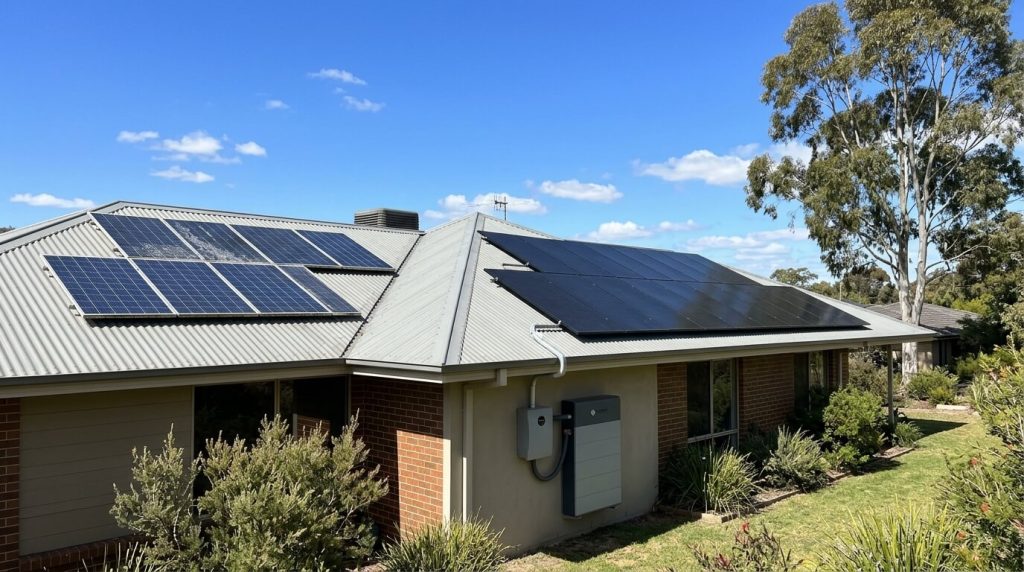
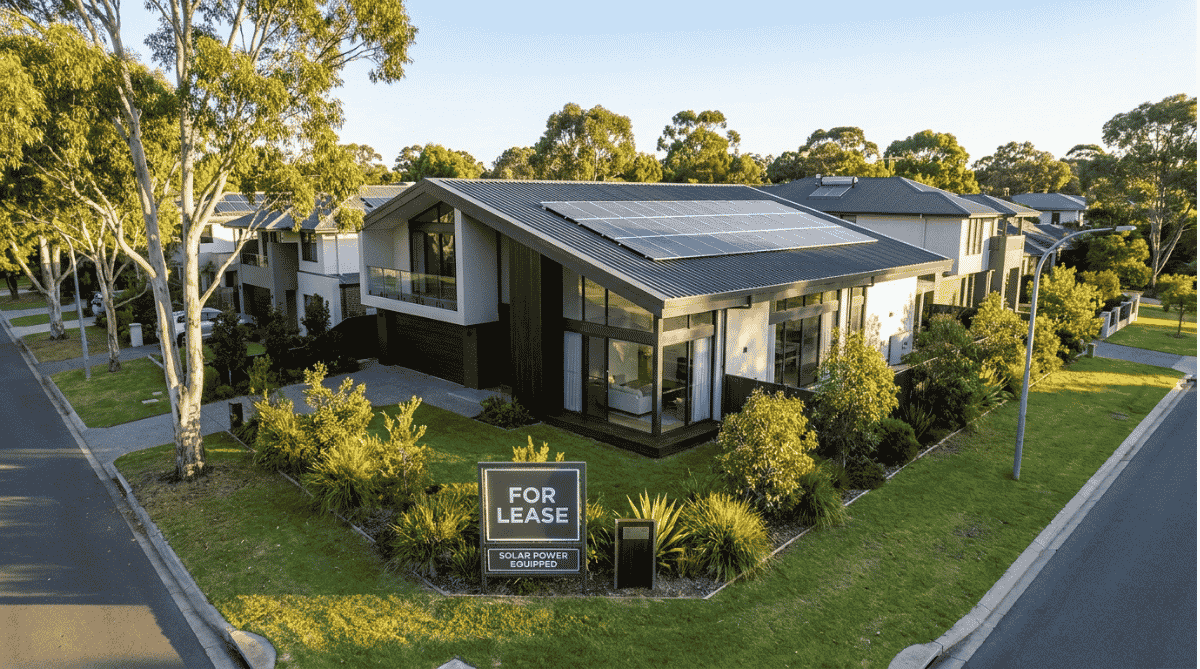
Solar panels for a rental property in Australia raise a question that doesn’t come up for owner-occupied homes: who actually benefits? The landlord pays for the install. The tenant gets the lower bills. So is it worth it for you as the property owner — or are you funding someone else’s savings?
The honest answer in 2026: yes, more often than not. But the case isn’t the same as installing solar on your own home. The numbers, the tax treatment, and the long-term play all work differently. This guide walks through how landlords actually make money on rental-property solar, what the tax office allows, and where it doesn’t make sense.
Who Benefits From Solar on a Rental Property?
Three parties have skin in this game: you (the landlord), your tenant, and eventually the next buyer if you sell.
Tenant savings. Lower power bills make the property easier to rent and less likely to sit vacant between leases. In Brisbane, Sydney, and Melbourne rental markets, properties with solar consistently rent 5-15 days faster than equivalent properties without — that’s roughly $300-$600 in saved vacancy on a typical rental.
Rent uplift. Many landlords add $10-$25 per week to advertised rent on solar-equipped properties. Tenants accept this because their bills drop by more than the rent increase. The Tenancy unions in NSW, VIC, and QLD broadly support this model, provided the rent rise reflects the value transferred.
Property value. Australian property valuation research from 2024-2025 suggests a quality solar system adds $8,000-$18,000 to sale price on a $700K-$900K detached home, more on bigger properties. That’s a return you bank when you sell.
Depreciation deduction. This is the big one most landlords miss. Solar panels and inverters can be depreciated as capital works on a rental property, claimed against your rental income each year.
So your benefit isn’t just lower tenant bills — it’s a combination of vacancy reduction, rent uplift, capital gain, and tax depreciation.
What Does the ATO Allow on Rental Solar?
Two streams of deduction apply (talk to your accountant before relying on this — rules change):
Capital works deduction (Division 43). The solar system is treated as a capital improvement. You claim a percentage of the cost as a deduction each year, typically over 20-40 years depending on the asset class.
Depreciation on individual items (Division 40). Some components (inverter, monitoring equipment, battery) may qualify for faster depreciation under the prime cost or diminishing value methods.
Instant asset write-off. From time to time the federal government has allowed accelerated depreciation for small businesses owning rental property. Check current settings before installing.
The practical effect: for a $12,000 solar+battery install on a rental, you might claim $400-$1,200 in tax deductions per year over the system’s life, on top of the other benefits.
How Much Does Rental Solar Actually Cost the Landlord?
For a 6.6kW solar system on a single-storey rental:
- System cost (after STC rebate): $5,500–$8,000
- Battery (if installed, after federal rebate): $6,000–$9,500
- Total upfront: $11,500–$17,500
If the system pays you back through tenant retention, rent uplift, depreciation, and resale value, the effective cost over 10 years often nets out positive. For broader cost context across all property types, see our solar energy cost in Australia guide.
Do You Need a Battery on a Rental Property?
This is where landlord economics diverge from owner-occupier economics.
Picture this: it’s a Tuesday afternoon, your tenants are at work, solar is generating 4 kWh that the home doesn’t use, and that energy is going to the grid at a 5 cent feed-in tariff. Whoever holds the retailer account gets that 5 cents — usually the tenant. So as the landlord, you’re paying for energy you don’t capture.
A battery changes this. Stored solar is used by the tenant in the evening, when grid power costs 35-45 cents. The tenant’s savings increase significantly — which means the rent uplift you can charge is higher, and the property is even more attractive to renters.
For most rental properties in QLD, NSW, VIC, and SA, the maths suggests solar with battery is the better landlord investment in 2026, even though the upfront cost is higher.
What About Body Corporate / Strata Rentals?
If your rental is a strata-titled unit or townhouse, you need committee approval before installing solar. Bodies corporate are increasingly approving solar installations on rental properties — especially in NSW and VIC where strata reforms now actively support it — but expect a paperwork lag of 2-3 months.
For townhouse rentals specifically, our solar for townhouse Australia guide covers the strata approval flow in detail.
Where Solar Doesn’t Make Sense on a Rental
Some scenarios where the maths breaks down:
- You’re planning to sell within 12 months. Payback through tenant retention takes time. If you’re cashing out soon, focus on cosmetic upgrades.
- The property is in a low-rent area where tenants don’t pay power. Some lease structures include power in rent — in which case solar saves you money, not the tenant, but the rent uplift play doesn’t work.
- The roof needs replacing in the next 5 years. Removing and reinstalling panels for a roof replacement costs $1,500-$3,000. Do the roof first.
- Short-term rentals (Airbnb) with high vacancy. The savings model relies on consistent occupancy. Empty homes don’t save power.
Where Tesseract ZERO Fits In
Tesseract ZERO can be a strong fit for landlords because of how the contract structure works. The system is installed at $0 upfront — so you’re not putting capital into the property. Your tenant signs up for the energy plan at a fixed $0.28/kWh for 10 years (or you can carry the account yourself for between-tenant periods). Maintenance, inverter replacement, and warranty risks all sit with us, not with you as the property owner. For investors who like the marketing benefit of solar without the asset on the balance sheet, this model works. For investors who specifically want the capital depreciation benefit, traditional ownership is the better path.
The Bottom Line
Solar panels for a rental property in Australia rarely make money for landlords purely through electricity savings — because the tenant uses the electricity. But once you stack vacancy reduction, rent uplift, capital gains, depreciation, and property attractiveness together, the landlord case usually stacks up. Just make sure the property and the rental market suit it before committing.
If you want a tailored numbers analysis for your specific rental, book a free assessment and we’ll work through the figures with you.
If you’re weighing affordability across the board, our next post on affordable solar systems in Australia covers value-focused options and how to spend less without sacrificing quality.
Frequently Asked Questions
Can I claim solar on my rental property at tax time?
Generally yes — through capital works deduction and/or asset depreciation. Specifics depend on system cost, your ownership structure, and current ATO rules. Always confirm with your accountant or tax adviser before relying on a specific figure.
Will my tenant try to renegotiate rent if I install solar?
Some will. The defensive move is to install solar before listing the property (or between leases) and reflect the value in advertised rent from day one. Adding solar mid-lease and then raising rent often triggers tenancy tribunal disputes.
What happens to solar if I sell the rental property?
Most owned systems transfer with the property and become a selling feature, adding $8,000-$18,000 to typical sale prices. On Energy-as-a-Service arrangements, the contract usually transfers to the new owner — make sure your contract has a clean transfer clause if you’re planning to sell.
How is Tesseract ZERO different?
Clean energy made at your home, without buying the system.
Tesseract installs, owns and maintains solar and a battery at your home. You pay only for the clean energy you use, at one fixed rate for 10 years.