
📋 In this guide:
- Energy provider vs electricity retailer: different roles, different incentives
- Retailers resell grid electricity generated somewhere else
- Owning solar shifts cost and risk onto you
- A third model brings generation and storage home
- Tesseract ZERO is built on that third way
Most people use “energy company” to mean one thing: whoever sends the power bill. But the energy provider vs electricity retailer question is worth a closer look, because the way your household buys energy is starting to change. And the difference shapes who carries the cost, who carries the risk, and how much control you have over your bill.
For decades, Australian homes had one real option. Then a second arrived. Now there’s a third. Which one actually fits the way you live? This guide explains all three in plain English for homes in Sydney and Adelaide.
What Does an Electricity Retailer Actually Do?
An electricity retailer is the company on your bill. It buys electricity from the wholesale market, pays the network companies that deliver it to your street, and bills you for what you use.
What a retailer usually doesn’t do is make the energy at your home. The power you use has already been generated somewhere else, then transmitted, distributed, managed and retailed before you switch on a light. Every step in that chain carries a cost, and every one of those costs ends up in your bill.
Some large companies both generate and retail electricity. The industry calls them “gentailers”. Their power stations still sit far from your house, though, so the energy still travels the same long route to reach you.
Option One: Buy From the Grid
This is how most homes still work. You pick a retailer, compare plans, maybe negotiate a discount, and pay for what you use.
It’s simple, and it’s familiar. The catch is that you don’t control the underlying costs. You can change retailers. You can compare plans. You can negotiate another discount. But you’re still buying your energy through essentially the same system. According to ABS data, electricity prices have risen about four times over in 20 years, roughly 7.5% a year. And peak grid rates can reach up to 56¢ per kWh.
Option Two: Buy Your Own System
The second option arrived with rooftop solar and home batteries. Produce more of your own energy, and you need less from the grid.
It can be a good solution. But now you’re the owner of an energy system. You choose the panels, the inverter and the battery. You decide whether to finance it. A typical solar and battery system can cost $14,000 to $28,000, even after rebates. And once you own it, the responsibility is yours too: technology changes, batteries age, and components eventually need servicing or replacement. The investment happens before the savings do.
Picture a couple in Castle Hill with two quotes on the table. They like the idea of solar. They don’t love the idea of a $20,000 loan or of becoming the maintenance department for a battery. Is there a way to get the energy without owning the equipment?
Option Three: An Energy Provider That Brings the Source Home
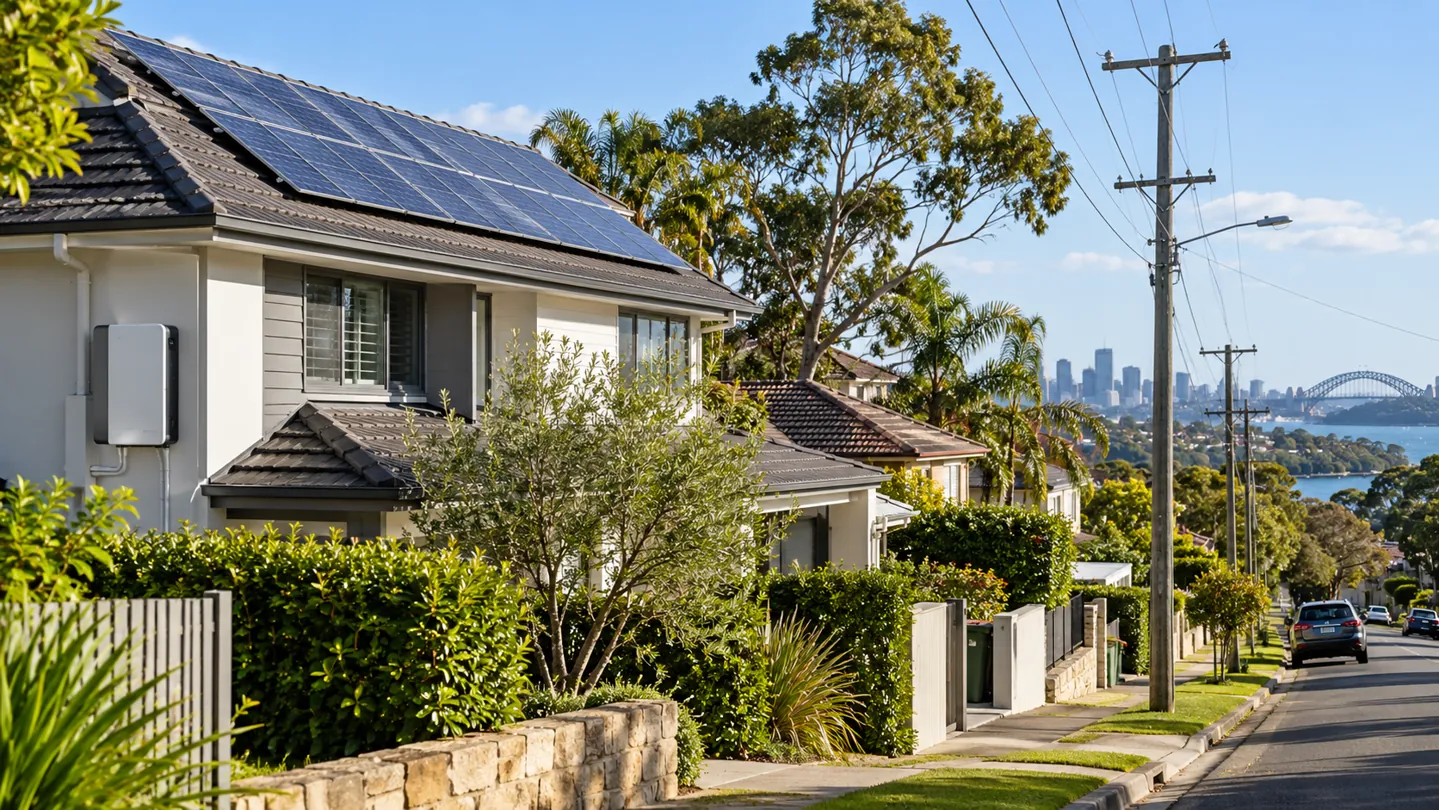
That’s the gap a new kind of energy provider fills. Instead of selling you equipment, or reselling electricity generated somewhere else, the provider installs generation and storage technology at your home, owns it, and you pay for the energy your home uses.
In practice, your house generates clean energy during the day, stores it for later, and imports less electricity from the grid. You stay connected to the grid for the times you need it. You just don’t rely on it in the same way.
Here’s a simple way to see the three side by side:
| Grid retailer | Own your system | Energy provider | |
|---|---|---|---|
| Upfront cost | None | Significant | None |
| Where energy is made | Far away | At your home | At your home |
| Who owns the equipment | Not applicable | You | The provider |
| Who handles maintenance | Not applicable | You | The provider |
| Price certainty | Changes with the market | Depends on your system | Fixed rate for the term |
You may also see this model called energy-as-a-service. Our simple guide to energy-as-a-service covers the mechanics.
How Is Tesseract ZERO Different?
Tesseract ZERO is built on that third way to energy. We are not trying to become another solar company, and we’re not building another traditional electricity retailer. We believe the next generation of energy providers will bring generation, storage, technology and energy supply closer to the customer.
Tesseract was founded in South Australia in 2018 and comes from energy and technology, from storage and virtual power plants to grid-scale systems. With Tesseract ZERO, we install the technology at your home, own it, operate it and manage it. You pay a fixed 28¢ per kWh for the clean energy your home uses, fixed for the 10-year agreement term, with $0 upfront, no solar loan and no maintenance responsibility.
For eligible households, typical customers may save up to 30% on their energy costs.
Based on the savings of a typical customer. Eligibility criteria apply. Savings vary based on household energy usage and location.
You can compare the models in detail on our Tesseract ZERO vs electricity retailers page.
FAQ
What is the difference between an energy provider and an electricity retailer?
An electricity retailer resells grid electricity generated elsewhere and bills you for it. An energy provider, in the newer sense, installs and owns generation and storage technology at your home and you pay for the clean energy your home uses, while you stay connected to the grid.
Do I still need an electricity retailer with an energy provider?
You remain connected to the grid, so you’ll still use grid electricity for the part of your needs that home generation doesn’t cover. The difference is how much you rely on it.
Is an energy provider the same as a solar lease?
Not quite. With a lease, you typically pay for the equipment over time. With a provider model like Tesseract ZERO, you pay for the clean energy your home uses, and the provider keeps ownership and responsibility for the technology.
Conclusion
The energy provider vs electricity retailer question comes down to who makes your energy, who owns the equipment and who carries the risk. Buying from the grid is simple but leaves you exposed to price rises. Owning a system gives you control but also the cost and upkeep. A third way now sits between them.
Want to see which suits your home? Send us one power bill. No cost, no obligation — and if it isn’t a good fit, we’ll tell you. Get in touch.
How is Tesseract ZERO different?
Clean energy made at your home, without buying the system.
Tesseract installs, owns and maintains solar and a battery at your home. You pay only for the clean energy you use, at one fixed rate for 10 years.