
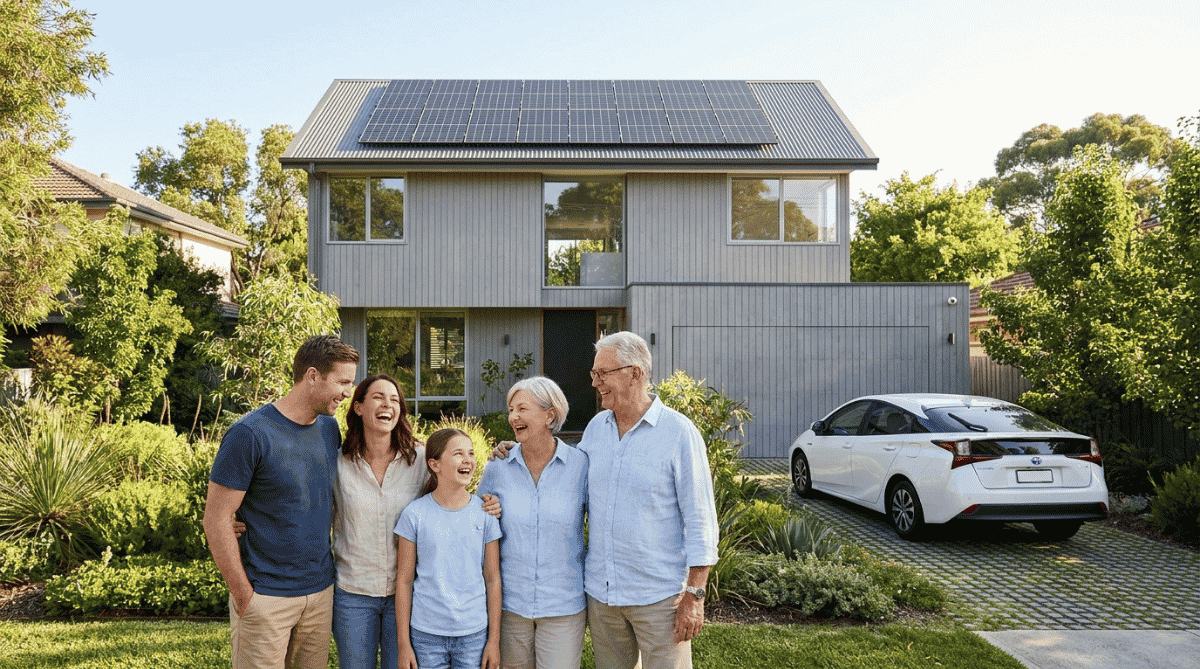
Australia has long been known for its abundant sunshine and forward-thinking approach to residential design. Today, modern Australian homes are increasingly integrating solar panels and battery systems — not just as an upgrade, but as a smart foundation for long-term energy planning. This comprehensive solar and battery guide australia explores how these technologies work together, what system sizes suit most Australian households, and how homeowners are accessing this technology in 2026.
Solar + battery systems are no longer viewed as optional add-ons. For many households, they are becoming part of what defines a future-ready home: efficient, technologically integrated, and energy conscious.
Why Solar + Battery Is Becoming the Standard in Australia
Australian homes are evolving. Open-plan designs, home offices, electric vehicles, smart appliances and climate control systems have changed how households use electricity.
At the same time, solar technology has matured significantly. Panel efficiency has improved, battery storage has become more practical, and integrated home energy systems now allow households to manage energy intelligently throughout the day.
For many homeowners, combining solar generation with battery storage offers:
- Greater control over when energy is used
- Improved energy planning
- Better alignment between daytime generation and evening consumption
- A modern, self-managed approach to household power
Rather than relying solely on daytime solar production or grid supply, a battery enables energy to be stored and used when it’s most valuable — typically in the evening when households are most active.
How a Solar + Battery System Works in a Modern Home
Understanding the flow of energy makes it easier to see why this combination has become so popular.
Daytime Energy Generation
Solar panels installed on the roof convert sunlight into electricity during daylight hours. In many Australian cities, solar production peaks between late morning and mid-afternoon.
During this time, the home first uses solar energy to power appliances directly.
Battery Storage
If the system produces more electricity than the home needs at that moment, the excess energy is stored in the battery instead of being unused.
Modern lithium-ion home batteries are designed to store significant capacity in a compact footprint, making them suitable for suburban properties and urban homes alike.
Evening & Night-Time Usage
Once the sun sets and solar panels stop generating electricity, the home automatically draws power from the battery.
This stored energy can support:
- Lighting
- Kitchen appliances
- Entertainment systems
- Air conditioning or heating
- Charging devices
- Evening household routines
Only when the battery is depleted does the home draw electricity from the grid.
Grid Interaction
A solar + battery home remains connected to the grid, providing flexibility and backup when required. The system intelligently manages the transition between solar, battery, and grid power.
The result is a seamless energy experience — without daily manual adjustments.
What Size System Do Most Australian Homes Need?
System size depends on household size, energy usage patterns, and roof space. However, some configurations are particularly common across Australia.
6.6kW Solar System Explained
A 6.6kW solar system is one of the most widely installed residential systems in Australia. It typically consists of around 15–18 panels (depending on panel wattage).
For an average family home, this size can generate a substantial portion of daytime electricity needs.
It is often chosen because it balances:
- Roof space efficiency
- Strong daytime production
- Cost effectiveness
- Compatibility with battery integration
What Does a 10kWh Battery Cover?
A 10kWh battery is a common pairing for a 6.6kW system.
In practical terms, a 10kWh battery can support several hours of evening usage for a typical household. While exact duration depends on appliance load and usage habits, it often covers:
- Evening lighting
- Cooking appliances
- TV and entertainment
- Charging electronics
- Moderate heating or cooling use
For many households, this capacity aligns well with evening demand patterns.
Matching System Size to Household Usage
Every home is unique. Factors that influence system sizing include:
- Number of occupants
- Work-from-home usage
- Electric vehicle charging
- Pool pumps
- Air conditioning frequency
- Roof orientation and shading
A well-designed system considers both daytime production and evening consumption.
Benefits of Solar + Battery for Modern Living
Solar + battery systems are often associated with sustainability, but their advantages extend well beyond environmental considerations.
Predictable Energy Planning
When energy is generated and stored onsite, households gain better visibility into how and when electricity is used. This supports long-term planning and budgeting.
Greater Energy Flexibility
Battery storage provides flexibility in how electricity is consumed, particularly during peak evening hours.
Integration With Smart Homes
Modern solar systems integrate seamlessly with smart home platforms, allowing homeowners to monitor usage through apps and dashboards.
Long-Term Sustainability
Generating renewable energy onsite contributes to lower carbon emissions and aligns with environmentally conscious building practices.
Property Appeal
Homes equipped with integrated solar + battery systems are increasingly viewed as forward-thinking and future-ready.
Different Ways to Access Solar + Battery in Australia
Australian homeowners have several options when considering solar + battery adoption.
Buying Solar Outright
Some homeowners choose to purchase and own their system directly. This approach provides full ownership but requires upfront capital.
Solar Loans
Finance options allow homeowners to spread system costs over time. Loan structures vary and should be carefully reviewed.
Government Incentives
Various state and federal programs may provide rebates or incentives, depending on eligibility and location.
Energy Subscription Models
In recent years, energy subscription models have emerged. These allow homeowners to access solar + battery systems without upfront installation costs, instead paying for energy usage through a structured agreement.
For households seeking a simplified approach to solar integration, subscription models offer an alternative pathway to adoption.
Is Solar + Battery Right for Every Home?
While solar + battery systems suit many Australian properties, some factors should be evaluated:
- Roof orientation and shading
- Structural suitability
- Ownership status (owner-occupied vs rental)
- Household electricity profile
- Long-term residence plans
A proper assessment ensures the system is appropriately matched to the property.
The Future of Residential Energy in Australia
Australia continues to lead in rooftop solar adoption. As battery prices improve and smart grid technologies evolve, residential energy systems are becoming more integrated and dynamic.
Energy management is shifting from passive consumption to active participation. Households are no longer just electricity users — they are energy producers and managers.
In this environment, flexible access models — including zero-upfront solar + battery solutions — are gaining attention among homeowners who value simplicity and predictability.
Modern Australian homes are increasingly embracing smarter, more adaptable energy systems designed for long-term living.
Exploring Solar + Battery Made Simple
For homeowners interested in integrating solar and battery technology without managing installation logistics or upfront costs, new energy service models are redefining accessibility.
Solutions such as Tesseract ZERO are designed to simplify solar + battery adoption by offering structured access to integrated systems under clear usage frameworks.
As solar + battery continues to shape the future of Australian housing, understanding the available options allows homeowners to make informed, forward-looking decisions.