📋 In this guide:
- Smart meter rollout targets every NEM home by 2030
- No upfront cost is allowed for installation
- Two-year protection from unwanted tariff changes
- Half-hourly data shows exactly when you use power
- Tesseract ZERO starts by modelling your actual usage
If an electrician has turned up to swap your old meter, or a letter from your retailer says one is coming, you’re part of the national smart meter rollout. It’s one of the biggest changes to Australian household electricity in years, and it’s happening in both Sydney and Adelaide right now.
For many people, the questions are simple. Will it cost me anything? Will my bill go up? And is there anything useful I can do with it? This guide answers all three, based on the rules set by the Australian Energy Market Commission (AEMC).
What Is a Smart Meter?
An old accumulation meter records a single running total of the electricity you use. Someone has to read it in person, and your bill is often an estimate between readings.
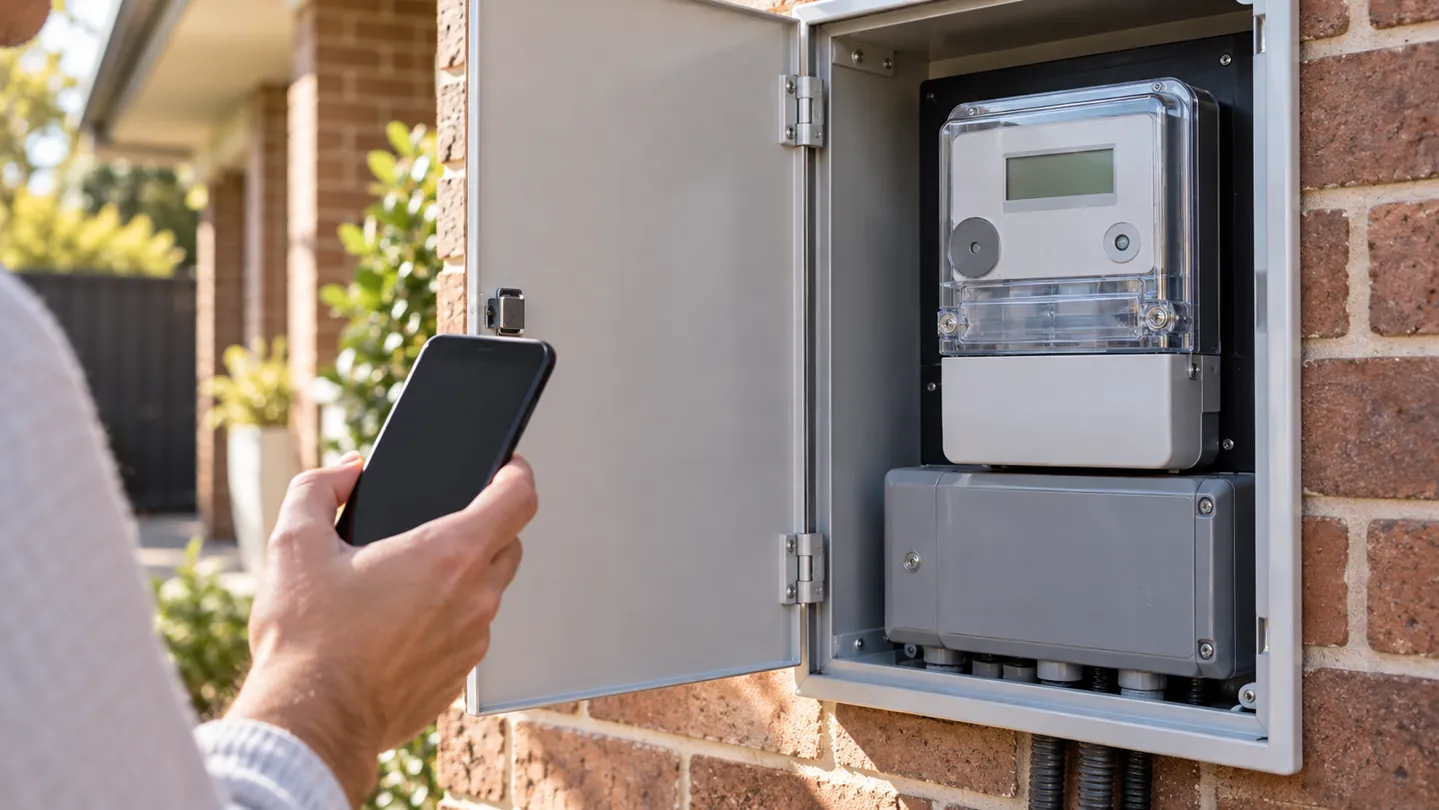
A smart meter records your usage in short intervals, usually every 30 minutes, and sends the data to your retailer remotely. That means accurate bills, no estimated reads, and a detailed picture of when your household uses power.
What Is the Smart Meter Rollout?
The AEMC has finalised rules to speed up smart meter installation across the National Electricity Market, which includes NSW and South Australia. The goal is universal smart meter coverage by 2030. According to the AEMC, the accelerated rollout began in December 2025, with network businesses replacing old meters in planned batches rather than one home at a time.
Will It Cost Me Anything?
Under the AEMC’s rules, retailers can’t charge households any upfront cost ahead of a smart meter installation. So you shouldn’t receive a separate bill just for the new meter.
Will My Tariff Change?
This is the part that worries people most, and it’s where the new rules offer real protection:
- Two years of protection. For two years after installation, your retailer can’t move you onto a new tariff structure without your explicit consent.
- Bill comparisons afterwards. After that period, retailers must show you historical bill comparisons, so you can see what you would have paid under a new tariff.
- Clear notice. New consent and notification requirements apply before any retail tariff change.
- Flat-rate options. State governments can require retailers to keep offering flat-rate plans to smart meter customers.
In short: you can’t be switched onto time-of-use pricing without knowing about it.
Why a Smart Meter Can Help You Save
Picture a household in Hurstville that got its smart meter in the new year. For the first time, their retailer’s app showed half-hourly usage. The surprise? A pool pump running from 5pm to 9pm, every day, right in the peak window. Moving it to a midday timer cost nothing and cut a visible chunk from the next bill. Would they have spotted that without the data? Almost certainly not.
A smart meter unlocks several things:
- Usage insights. See exactly when your home uses the most power.
- Time-of-use plans. These can suit households that use more power in the middle of the day. Our guide to time-of-use electricity in NSW explains the windows.
- The Solar Sharer Offer. Free midday power plans need a smart meter, because retailers must measure usage in half-hour intervals. See our Solar Sharer Offer guide.
- Better decisions about energy at home. Knowing your evening usage is the first step to working out whether generating and storing energy at home makes sense.
How to Use Your New Data
- Download your interval data from your retailer’s app or website.
- Look at a typical weekday and a weekend, and note where the peaks are.
- Check the 3pm to 9pm window. That’s when Ausgrid’s network peak applies from June to August and November to March, and peak grid rates can reach up to 56¢ per kWh.
- Compare plans on Energy Made Easy using your real usage, not an estimate.
How Is Tesseract ZERO Different?
A smart meter shows you where your energy costs come from. Tesseract ZERO is a third way to energy. We install solar and battery technology at your home, own it and manage it. Your home generates clean energy during the day, stores it for later, and imports less electricity from the grid.
You pay a fixed 28¢ per kWh for the clean energy your home uses, fixed for the 10-year agreement term, with $0 upfront. And because we start with your numbers, your usage data is useful here too: we’ll model your actual usage and show you the numbers. Learn more on the Tesseract ZERO page.
FAQ
Do I have to pay for a smart meter?
Under the AEMC’s rules, retailers can’t charge an upfront cost ahead of a smart meter installation.
Will a smart meter put me on time-of-use pricing?
Not without your say. For two years after installation, your retailer can’t move you to a new tariff without your explicit consent, and there are notice requirements before any change.
When will every home have a smart meter?
The AEMC’s target is universal smart meter coverage across the National Electricity Market, including NSW and South Australia, by 2030.
Conclusion
The smart meter rollout brings accurate bills, detailed usage data and new customer protections. There’s no upfront charge, and you’re protected from sudden tariff changes. Most importantly, it gives you the information you need to see where your money goes, and to decide what to do about it.
Curious what your usage data says about your options? Send us one power bill. No cost, no obligation — and if it isn’t a good fit, we’ll tell you. Contact us here.
How is Tesseract ZERO different?
Clean energy made at your home, without buying the system.
Tesseract installs, owns and maintains solar and a battery at your home. You pay only for the clean energy you use, at one fixed rate for 10 years.