📋 In this guide:
- Daily supply charge applies whether you use power or not
- It mostly covers network and metering costs
- Supply charges vary noticeably between retailers and plans
- Small households feel the supply charge most
- Tesseract ZERO reduces grid imports; grid connection remains
Here’s a bill line that frustrates almost everyone: the daily supply charge. You could go on holiday for a month, switch everything off at the wall, and still get a bill. That’s because the daily supply charge isn’t about how much electricity you use. It’s the price of being connected at all.
It’s also one of the least understood parts of a power bill, and one of the easiest places for a “cheap” plan to hide its real cost. This guide explains what the supply charge pays for, why it differs so much between plans, and what you can realistically do about it in Sydney and Adelaide.
What Is the Daily Supply Charge?
The daily supply charge is a fixed amount, usually shown in cents per day, that you pay for every day of your billing period. Multiply it by the days in the period, and that’s how much of your bill arrives before you boil a kettle.
It exists because a big part of the cost of electricity has nothing to do with how much you use. The poles and wires on your street, the substation down the road and the meter on your wall all cost money to build and maintain, whether you use 5 kWh a day or 50.
What Does It Pay For?
Most of the supply charge goes to:
- Network costs: the transmission lines, local poles and wires, and substations that bring power to your home
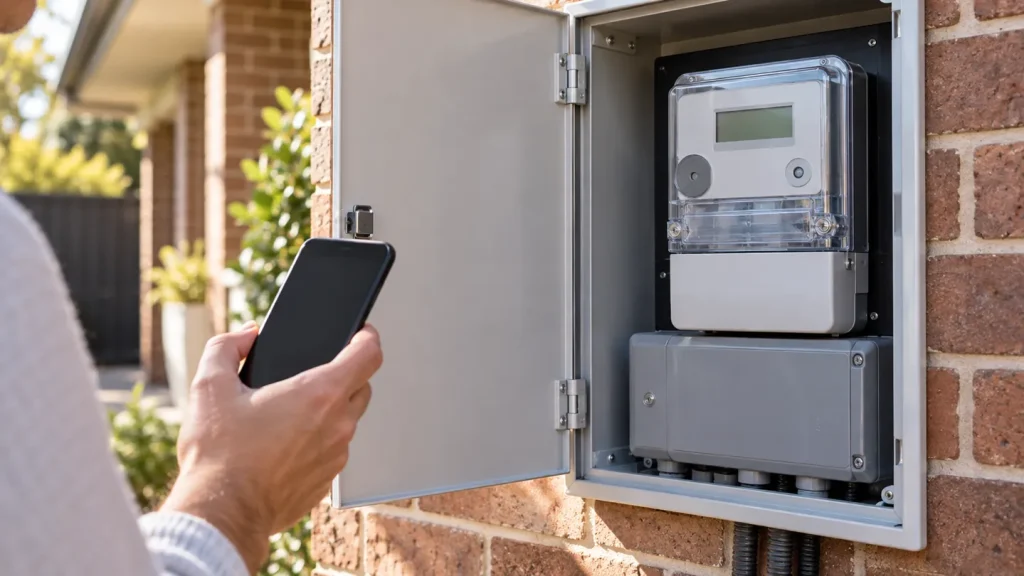
- Metering: the meter that measures your usage
- Retail costs: part of your retailer’s costs to run your account
Network charges are a large slice of the whole bill. EnergyPlans estimates they make up somewhere between two-fifths and half of a typical electricity bill, split between the supply charge and usage rates.
Why Supply Charges Differ Between Plans
Two retailers can pass on the same network costs very differently. One might offer a low supply charge and a higher usage rate. Another might do the opposite. Neither is automatically better. It depends on how much power you use.
There’s also a newer twist. Solar Sharer plans, launched on 1 July 2026 with three free hours of midday power, can recover that cost elsewhere, and a higher daily supply charge is one of the ways, as SolarQuotes notes. EnergyPlans also reported that supply charges were mostly increasing in 2026–27.
Who Feels It Most?
Picture a single retiree in Glenelg North who uses about 6 kWh a day. For her, the supply charge might make up a much bigger share of the bill than the power she actually uses. Now picture a family of five in Campbelltown using 25 kWh a day. For them, the usage charges dominate, and the supply charge is a smaller slice.
That’s why the “right” plan looks so different for different households. Which one sounds like you?
How to Keep Your Supply Charge in Check
- Find it on your bill. Look for “supply charge” or “daily charge” and note the cents per day.
- Compare the whole plan, not just one number. Use Energy Made Easy to compare plans against your actual usage, which weighs supply and usage charges together.
- Low-usage household? Prioritise a lower supply charge.
- High-usage household? Prioritise lower usage rates, especially at peak times.
- Check before switching to a Solar Sharer plan. Make sure a higher supply charge doesn’t wipe out the free hours.
Could you avoid the supply charge entirely by going off-grid? Technically yes, but for most suburban homes that’s a big, expensive step. Our guide to on-grid vs off-grid solar explains why most households stay connected. For more on reading every line of your bill, see how to read your electricity bill.
How Is Tesseract ZERO Different?
Here’s what Tesseract ZERO does and doesn’t change. You remain connected to the grid when you need it, so a grid connection, and the charges that come with it, stay part of the picture. What changes is how much electricity your home has to import.
Tesseract ZERO is a third way to energy. We install solar and battery technology at your home, own it and manage it. Your home generates clean energy during the day and stores it for later, and solar generated at home can cover up to 70% of a household’s daily energy. You pay a fixed 28¢ per kWh for the clean energy your home uses, fixed for the 10-year agreement term, with $0 upfront. Learn more on the Tesseract ZERO page.
FAQ
What is a daily supply charge?
It’s a fixed amount you pay for every day you’re connected to the grid, regardless of how much electricity you use. It mainly covers network and metering costs.
Why is my daily supply charge so high?
Supply charges vary between retailers and plans, and some plans set a higher supply charge in exchange for lower usage rates or free periods. EnergyPlans reported that supply charges were mostly rising in 2026–27.
Can I avoid the daily supply charge?
Only by disconnecting from the grid entirely, which is expensive and uncommon for suburban homes. For most households, the practical step is choosing a plan whose supply and usage charges suit your usage.
Conclusion
The daily supply charge is the cost of staying connected, and you pay it every day whatever you use. It matters most for smaller households and it’s often where a plan’s real cost hides. Compare plans on your actual usage, and focus on the part of your bill you can change: how much grid electricity you buy, and when.
Want to know which parts of your bill you can actually change? Send us one power bill. No cost, no obligation — and if it isn’t a good fit, we’ll tell you. Get in touch.
How is Tesseract ZERO different?
Clean energy made at your home, without buying the system.
Tesseract installs, owns and maintains solar and a battery at your home. You pay only for the clean energy you use, at one fixed rate for 10 years.