📋 In this guide:
- Can I install solar myself in Australia: mostly no, legally
- Grid-connected solar must be wired by a licensed electrician
- DIY installs void rebates and most warranties
- Small off-grid setups are the main legal exception
- Tesseract ZERO removes install, maintenance and inverter risk
You’ve looked at a few quotes, done some rough maths, and landed on the obvious question: could you skip the labour cost and put the panels up yourself? It’s a fair thing to ask. Solar isn’t cheap to have installed, and plenty of handy people have wired a shed or built a deck without calling anyone.
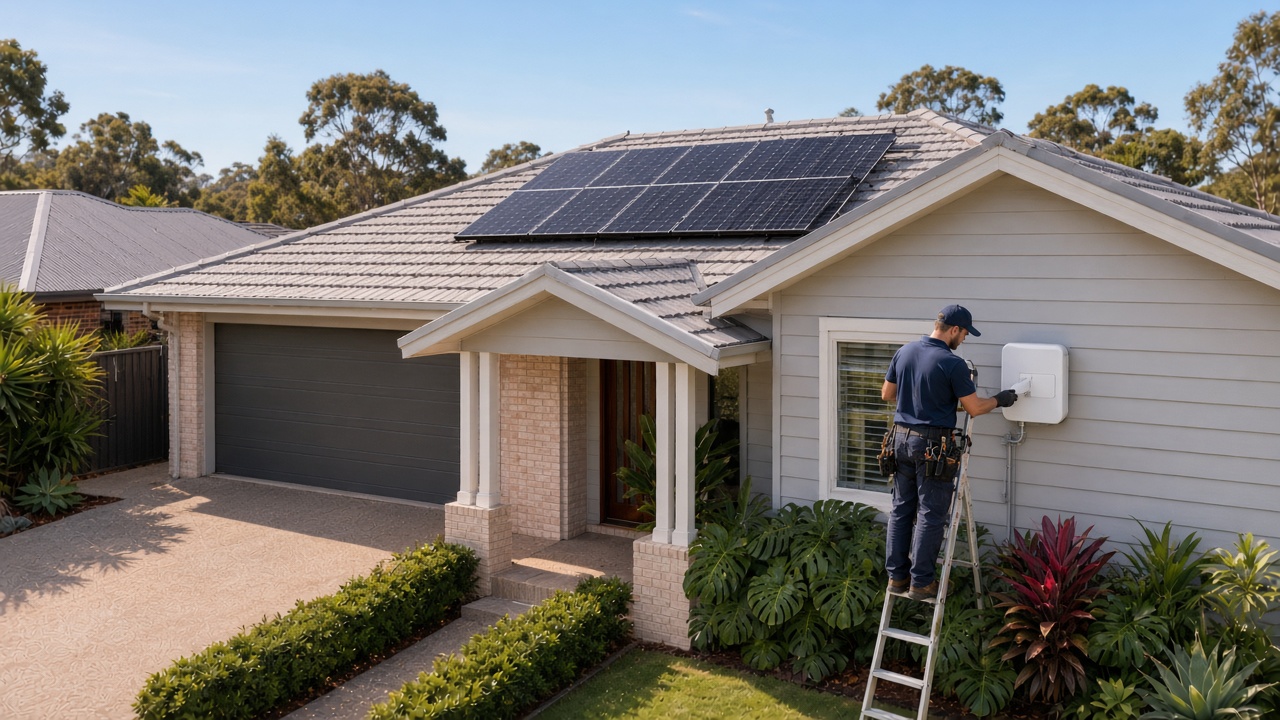
So can I install solar myself in Australia? For a normal grid-connected home system, the short answer is no, not legally on your own. The panels bolt to a roof easily enough, but connecting anything to your switchboard and the grid is electrical work, and in Australia that has to be done by a licensed electrician. There’s a real reason for the rule, and there are real consequences to ignoring it.
This guide walks through what the law actually allows, where the genuine risks sit, what you’d give up by going DIY, and the narrow cases where doing it yourself is fine.
Can You Legally Install Solar Yourself in Australia?
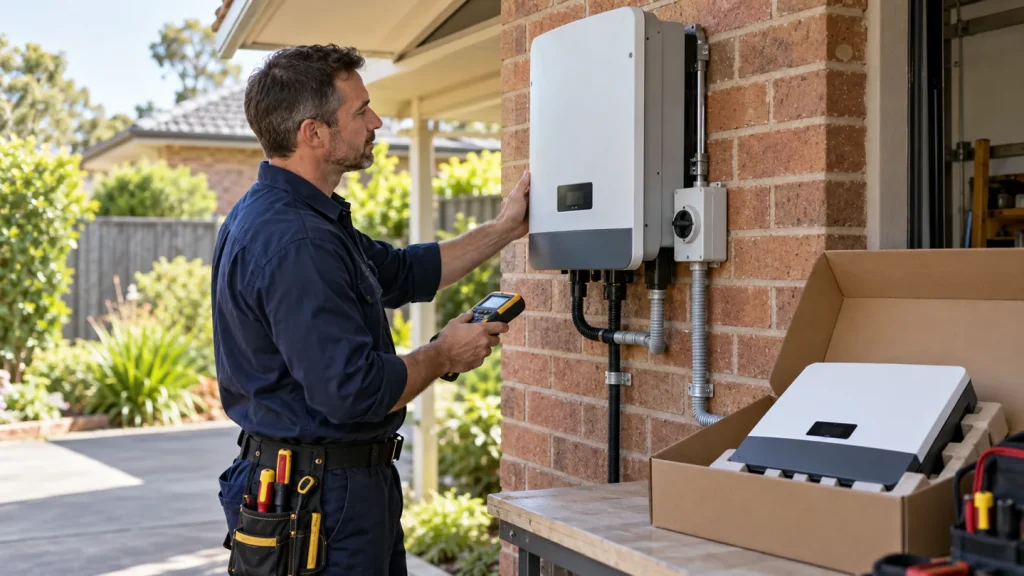
The physical mounting of panels isn’t the problem. The connection is. Wiring a system into your home’s switchboard, tying it to the grid, and commissioning an inverter are all classed as electrical work, and doing that work without a licence is illegal in every state and territory. It’s not a grey area.
On top of the electrical licence, grid-connected solar has to be signed off by an installer accredited by the industry body (currently through the Clean Energy Council’s accreditation scheme, though scheme names and rules change over time, so it’s worth confirming the current requirement). Your network operator won’t let an unaccredited system connect to the grid, and your retailer won’t pay you a feed-in tariff for power you export.
So while you can legally handle some of the mounting yourself in theory, the parts that make a home solar system actually work are off-limits without the right ticket.
What DIY Solar Actually Involves (and the Real Risks)
Say you ignored all that. What are you actually dealing with? A home solar array runs at several hundred volts of DC during daylight, and it can’t be switched off the way a normal circuit can, because the panels keep generating whenever the sun is on them. Get the wiring wrong and you’re looking at fire risk, electrocution risk, and a system that might quietly underperform for years without you knowing.
Then there’s your insurance. If a home’s electrical work wasn’t done by a licensed professional and something goes wrong, an insurer can decline the claim. Imagine a roof fire traced back to a DC connector you crimped yourself. That’s not a maintenance bill, that’s potentially the whole house.
Is saving on labour worth carrying that? For almost everyone, once they see what sits behind the wall, the answer lands firmly on no.
What You Lose Without an Accredited Installer
This is the part that catches people out. Australia’s solar rebate, delivered through small-scale technology certificates, only applies when the system is designed and installed by an accredited professional. Do it yourself and you forfeit that discount, which is often thousands of dollars off the upfront price. The “saving” from skipping labour can be smaller than the rebate you just walked away from.
Warranties go the same way. Panel and inverter manufacturers typically require professional installation for their warranties to hold. A DIY install can void the lot, so if an inverter fails in year three, that’s your cost, not theirs.
Put simply: the money you’d save on install is usually less than the rebates and warranty cover you’d lose. The maths rarely works.
When DIY Makes Sense — and When It Doesn’t
There is a legitimate space for DIY solar, and it’s the off-grid, low-voltage end. A portable panel for camping, a small 12V setup on a caravan, a panel keeping a battery topped up in a shed that isn’t tied to your home wiring, all of that is generally fine to do yourself, because none of it touches the grid or your switchboard.
The line is simple. If it connects to your home’s electrical system or the grid, it needs a licensed, accredited professional. If it’s a standalone low-voltage setup that powers a battery and nothing else, you’ve got room to tinker.
For the thing most people actually want, though, panels on the roof, feeding the house, backed by a battery, exporting to the grid, DIY isn’t the path.
A Real-Life Scenario: The Weekend That Wasn’t
Picture a Brisbane homeowner, good with tools, who priced a system and figured he’d save a few thousand doing it himself. He got as far as pricing panels and mounts before he read the fine print: no rebate without an accredited installer, no feed-in tariff without network sign-off, and his home insurer’s cover resting on licensed electrical work.
The numbers flipped on him. The rebate he’d lose was worth more than the labour he’d save, and that was before counting the risk. He booked a professional install instead and kept his weekend. Would the DIY route have actually left him ahead? Once he’d added it all up, not even close.
Where Tesseract ZERO Fits In
If the appeal of DIY was really about cost, there’s another way to remove the upfront hit without touching the wiring yourself. Tesseract ZERO installs a 6.6kWp solar and 20kWh battery system with $0 upfront and $0 maintenance, and every bit of the install, accreditation, servicing and inverter risk sits with us, not you. You pay a fixed $0.28/kWh for the power through the Tesseract retail partner rather than paying for hardware and labour up front. It’s the opposite trade to DIY: instead of taking on the risk to save money, you hand the risk over and still skip the big upfront bill.
The Bottom Line
Can you install solar yourself in Australia? For a grid-connected home system, no, the electrical connection legally needs a licensed, accredited professional, and going around that costs you the rebate, your warranties and potentially your insurance. DIY only makes sense for small, standalone off-grid gear that never touches your home wiring or the grid. For everything else, professional install isn’t red tape for its own sake, it’s what keeps the system safe, warranted and eligible for the discounts that make solar worth it.
Want the system without the upfront cost or the risk? Book a free assessment and we’ll handle the install, accreditation and maintenance end to end.
For help vetting the pros, read how to choose a solar installer in Australia, and for the full price picture see solar energy cost in Australia 2026. Next in this series, we look at what a solar system with a battery in Australia actually includes.
Frequently Asked Questions
Is it illegal to install solar panels yourself in Australia?
Mounting panels isn’t the issue, but connecting them to your switchboard and the grid is electrical work, and doing that without a licence is illegal everywhere in Australia. Grid-connected systems also need an accredited installer to sign off, or they can’t connect and won’t earn a feed-in tariff.
Will I still get the solar rebate if I install it myself?
No. Australia’s solar rebate, delivered through small-scale technology certificates, only applies when an accredited professional designs and installs the system. A DIY install forfeits that discount, which is often worth more than the labour you’d save.
Can I install an off-grid solar system myself?
Small, standalone low-voltage setups, like a panel charging a battery in a caravan or shed, are generally fine to do yourself because they don’t touch your home wiring or the grid. Anything connected to your switchboard or the grid still needs a licensed, accredited installer.
—
Önerilen Görseller ve Alt Text:
- Hero: Çatıda solar panel takan lisanslı elektrikçi — alt: “Licensed electrician installing rooftop solar panels safely in Australia”
- Uyarı görseli: DC connector ve switchboard yakın çekim — alt: “Home solar switchboard wiring that requires a licensed electrician in Australia”
- Karşılaştırma: DIY vs accredited install maliyet/rebate kutusu — alt: “DIY solar versus accredited installer cost and rebate comparison Australia”
How is Tesseract ZERO different?
Clean energy made at your home, without buying the system.
Tesseract installs, owns and maintains solar and a battery at your home. You pay only for the clean energy you use, at one fixed rate for 10 years.