📋 In this guide:
- Solar inverter replacement cost: roughly $1,000–$2,500 for string models
- Hybrid inverters typically cost $2,000–$4,500 installed
- Most inverters carry 10-year warranties
- Realistic inverter lifespan is about 12–15 years
- Tesseract ZERO customers carry no equipment maintenance responsibility
Solar panels are famously tough. They sit on your roof for decades and quietly keep working. The inverter is a different story. It’s the box on your wall that converts solar energy into power your home can use, and it’s the part most likely to fail first. If your system is getting on, it’s worth knowing the solar inverter replacement cost before that little status light turns red.
This guide covers current 2026 prices for the main inverter types, how long they typically last, the warning signs of a failing unit, and what to check before you replace one.
What an Inverter Does (and Why It Wears Out)
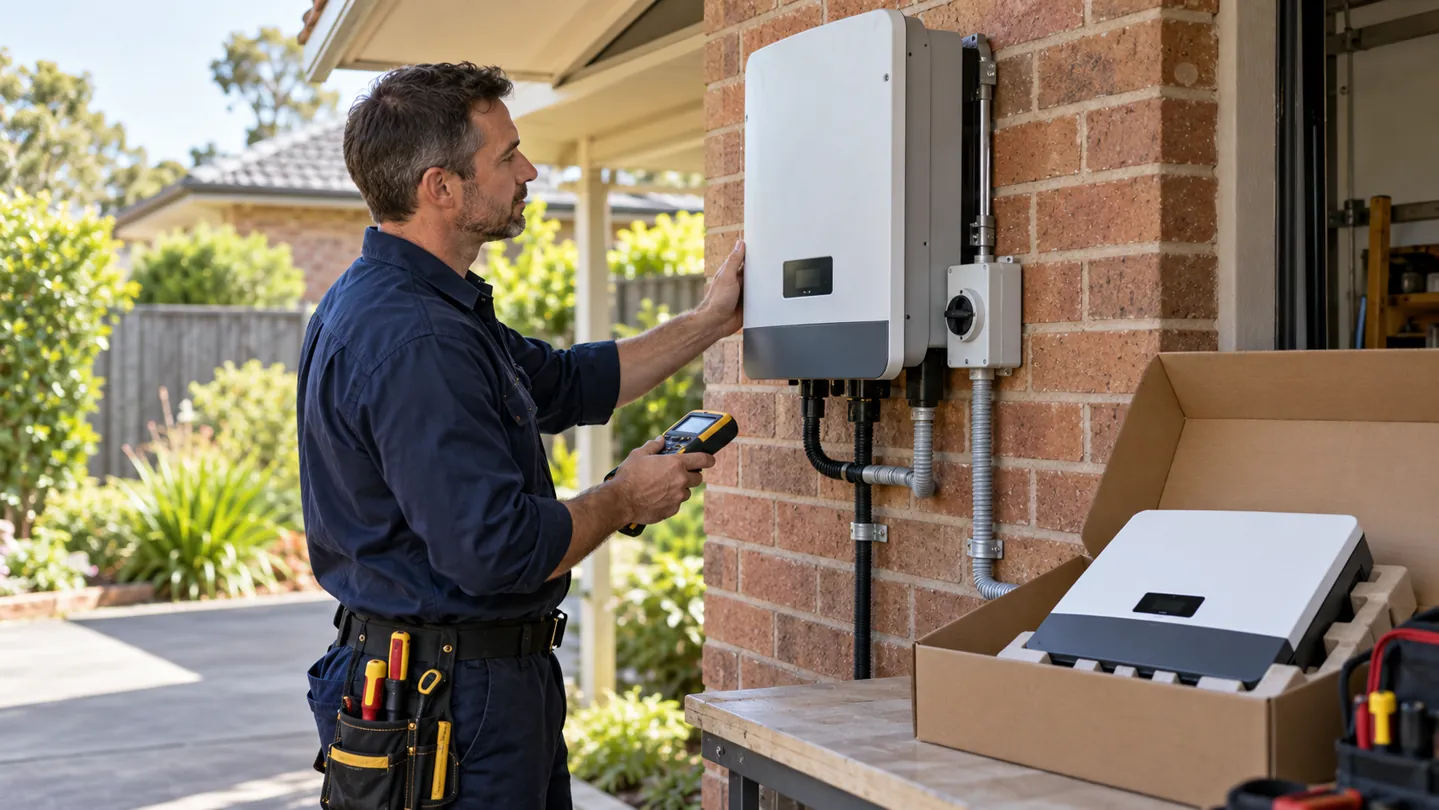
Solar panels produce direct current (DC). Your home runs on alternating current (AC). The inverter converts one to the other, all day, every day the sun is up. It also manages safety shutdowns and, in many cases, monitoring.
That constant work, plus heat, is why inverters wear out much sooner than panels. According to Why Solar’s 2026 pricing guide, panels routinely last 25 to 30 years, while inverters are typically warrantied for 10 years and realistically last 12 to 15.
2026 Replacement Costs by Inverter Type
Here are typical price ranges from Why Solar’s 2026 guide:
| Inverter type | Typical 2026 price | Typical warranty |
|---|---|---|
| String inverter (typical home system) | $1,000–$2,500 | 10 years |
| Hybrid inverter (solar + battery) | $2,000–$4,500 | 10 years |
| Microinverters (per panel) | $150–$250 each | Up to 25 years on some models |
Source: Why Solar, “Solar Inverter Cost Australia 2026”. Prices vary by brand, installer and site.
For a typical string system, Why Solar describes the inverter as a $1,500 to $4,000 component to budget for mid-life, so allow for installation and any extra work on top of the unit price. Microinverters cost more upfront, because a system needs one per panel, but some carry much longer warranties.
Signs Your Inverter May Be Failing
- Error codes or a red warning light on the unit
- Zero or unusually low generation in your monitoring app on a sunny day
- Bills that creep up even though your habits haven’t changed
- Unusual noises such as loud buzzing or clicking
- The unit is more than 10 years old and out of warranty
Consider a retired couple in Kogarah whose 2014 system seemed fine. Their bill slowly rose over a year, and they assumed prices had gone up. When an electrician finally checked, the inverter had been faulting on and off for months. How much free solar had they lost along the way? They’ll never know exactly, but it wasn’t small.
A quick check once a month, looking at your app or the inverter display on a sunny day, can catch this early.
Repair, Replace or Upgrade?
If your inverter is still under warranty, contact the installer or manufacturer first. Outside warranty, a repair is sometimes possible, but for older units replacement is usually the practical choice.
Before you replace it, ask:
- Will a hybrid inverter make sense? If you might add a battery later, a hybrid unit can save a second replacement.
- Is the new inverter correctly sized for your panels?
- What warranty comes with it, and who honours it if the installer closes?
- Does your switchboard need work? Older boards can add cost.
The Bigger Picture: Ownership Means Owning the Risk
An inverter failure is a good example of a cost that rarely shows up in the sales pitch. When you own your system, the technology changes, batteries age, and components eventually need servicing or replacement. That’s part of the deal. A typical solar and battery system can cost $14,000 to $28,000, even after rebates, and mid-life replacements come on top.
That doesn’t mean owning is wrong. It just means the true cost of ownership includes the years after installation. Our guides to the solar payback period and solar return on investment look at the full picture.
How Is Tesseract ZERO Different?
Tesseract ZERO is a third way to energy. You don’t buy the system, and there’s no maintenance responsibility on your side. We install solar and battery technology at your home, own it, operate it and manage it. Tesseract takes responsibility for the energy technology.
You pay a fixed 28¢ per kWh for the clean energy your home uses, fixed for the 10-year agreement term, with $0 upfront and no solar loan. See how it works on the Tesseract ZERO page.
FAQ
How much does it cost to replace a solar inverter?
According to Why Solar’s 2026 guide, a string inverter for a typical home system costs about $1,000 to $2,500, and a hybrid inverter about $2,000 to $4,500. Installation, sizing and your switchboard can change the final price.
How long does a solar inverter last?
Most inverters carry a 10-year warranty and realistically last around 12 to 15 years. Solar panels usually last much longer, often 25 to 30 years.
Should I replace my inverter with a hybrid inverter?
If you’re likely to add a battery in the next few years, a hybrid inverter can be worth considering, because it manages both solar and battery storage.
Conclusion
The solar inverter replacement cost is one of the few big expenses a solar owner can expect, often around the 12 to 15 year mark, soon after a typical 10-year warranty ends. Keep an eye on your system’s output, know your warranty, and plan for the replacement before it surprises you. And if you’d rather not own the equipment at all, there’s another way to get the benefit of solar.
Want to see how it would work for your home? Send us one power bill. No cost, no obligation — and if it isn’t a good fit, we’ll tell you. Get in touch.
How is Tesseract ZERO different?
Clean energy made at your home, without buying the system.
Tesseract installs, owns and maintains solar and a battery at your home. You pay only for the clean energy you use, at one fixed rate for 10 years.