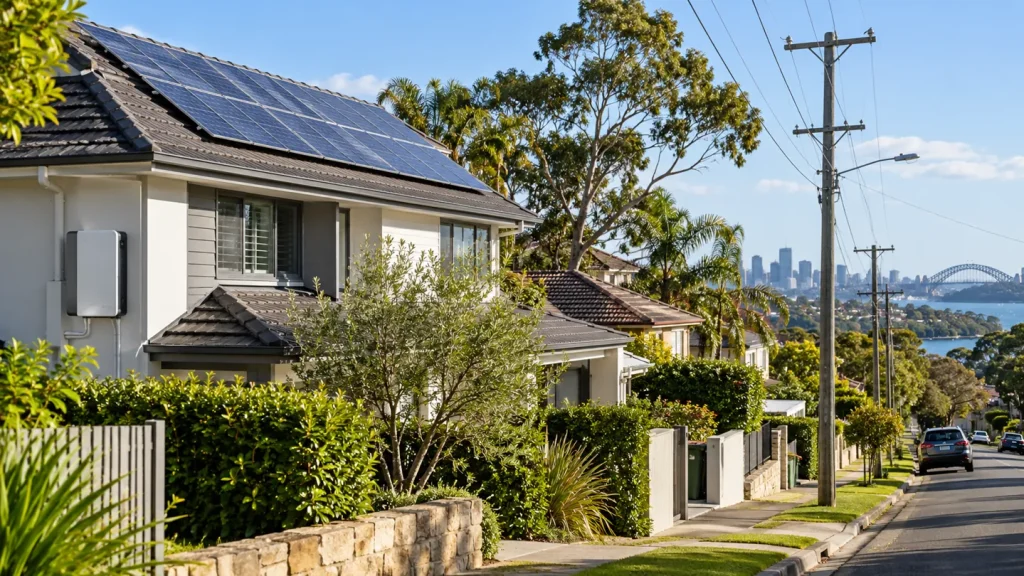
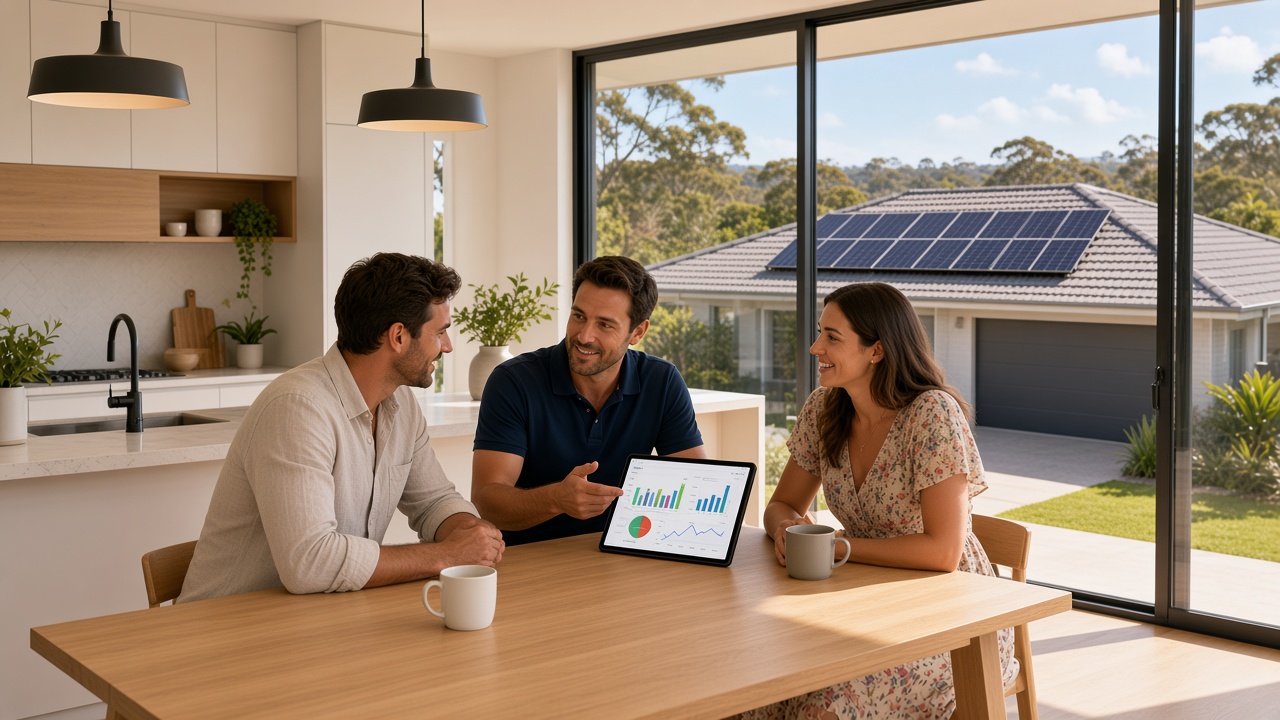
📋 In this guide:
- Solar PPA vs ownership Australia: pay per kWh or buy
- Ownership captures all savings but carries all risk
- A PPA removes upfront cost and maintenance worry
- Long-term value depends on capital, risk and time
- Tesseract ZERO is a PPA-style plan with a fixed rate
You've decided you want solar. The question that's left is how to pay for it, and it's a bigger decision than it first looks. Buy the system outright and you own an asset that saves you money for decades, but you also carry the cost and every risk that comes with it. Sign a power purchase agreement and you skip the upfront hit, but you don't own the panels. Neither is a trick; they're genuinely different trades.
Solar PPA vs ownership in Australia really comes down to what you value more: owning the asset and capturing every dollar of savings, or keeping your capital, avoiding the risk, and paying a predictable rate as you go. There's no universally right answer, only the one that fits your situation.
This guide lays out the core difference, compares the cost and risk honestly, looks at long-term value, and helps you work out which suits you.
PPA vs Ownership: The Core Difference
With ownership, you buy the solar system, it's yours, and from day one you keep all the power it generates and all the savings that flow from that. You also own every responsibility: the upfront cost, the maintenance, the repairs, and the risk that a component fails before it's paid for itself.
With a power purchase agreement (PPA), a provider installs and owns the system on your roof, and you pay for the power it produces, typically at a fixed rate per kWh, with little or nothing upfront. You don't own the hardware, so you don't capture every last dollar of savings, but you also don't carry the cost or the risk.
That's the whole thing in one line: ownership is buying, a PPA is paying for the output. Everything else, the cost comparisons, the risk, the long-term value, flows from that single difference.
Upfront Cost, Risk and Maintenance Compared
On upfront cost, it's stark. Ownership means a significant capital outlay, often many thousands of dollars for solar and battery together. A PPA typically means $0 or close to it upfront. If capital is tight, or you'd rather put it elsewhere, that gap alone drives a lot of decisions.
On risk, ownership puts it on you. If the inverter fails, if the panels underperform, if a repair is needed out of warranty, you pay. Under a PPA, the provider owns the hardware, so those failures are theirs to fix, not yours to fund.
On maintenance, same story. An owned system is your responsibility to service and monitor. A PPA usually bundles maintenance in, because the provider owns the asset and wants it running well. Ask yourself honestly: do you want to be the one managing an inverter warranty claim in year six, or would you rather that never be your phone call to make?
Long-Term Value: Who Comes Out Ahead?
This is where it gets nuanced, and where you should be wary of anyone giving you a single confident answer. Over the full life of a system, an owner who buys well, has no major failures, and stays in the home for decades can come out ahead in pure dollars, because after payback the power is essentially free to them.
But that's the best case, and it assumes you had the capital, the system performed, nothing expensive broke, and you stayed put. A PPA trades some of that upside for certainty: no upfront cost, no risk, a predictable rate, and no exposure to a failure wiping out your savings. You're paying for peace of mind and cash-flow, which for many households is worth more than squeezing out the maximum theoretical return.
So who wins? On paper, over a long enough horizon with everything going right, ownership can. In real life, weighing risk and cash-flow, a PPA is the better fit for a lot of people. Be honest about which set of assumptions actually describes you.
Which One Suits Your Situation?
Ownership tends to suit you if you have the capital spare, you want to own the asset, you're comfortable carrying maintenance and repair risk, and you expect to stay in the home long enough to reach and pass payback.
A PPA tends to suit you if you'd rather not tie up capital, you want to avoid the risk of an expensive failure, you value a predictable rate against rising grid prices, and you want maintenance handled for you.
Picture two neighbours. One has savings spare, loves owning things outright, and plans to stay put for twenty years, ownership fits her. The other would rather keep his cash liquid, doesn't want to think about inverters, and wants a fixed rate he can plan around, a PPA fits him. Same street, same roof angle, different right answer. Which neighbour sounds more like you?
A Real-Life Scenario: Same Roof, Different Choice
Picture a couple comparing quotes. Buying outright, the system would pay back over several years and then run largely free, appealing, but it meant a five-figure cheque and carrying the risk of any future repair themselves. A PPA meant nothing upfront, a fixed rate, and maintenance handled, but they wouldn't own the panels.
They sat with it and realised the decision wasn't about which was "cheaper" in some absolute sense, it was about what they wanted to carry. They didn't want a large outlay or a future repair bill hanging over them, and a predictable rate suited how they budgeted. So they went with the PPA, not because ownership was wrong, but because it wasn't right for them. A different couple, with cash spare and a taste for owning, would have chosen the opposite, and also been right.
Where Tesseract ZERO Fits In
Tesseract ZERO is a PPA-style plan, so it sits firmly on the "pay for the output" side of this comparison. You get a 6.6kWp solar and 20kWh battery system with $0 upfront and $0 maintenance, and you pay a fixed $0.28/kWh for the power through the Tesseract retail partner. Because Tesseract owns the system, the inverter and battery risk is ours, not yours. Crucially, it isn't a locked box: the 10-year agreement includes options to exit early, transfer it, or buy the system, so choosing a PPA now doesn't shut the door on ownership later. That flexibility is worth weighing when you're comparing the two paths.
The Bottom Line
Solar PPA vs ownership in Australia comes down to a single trade: own the system and capture all the savings while carrying all the cost and risk, or pay for the power on a PPA and swap some long-term upside for no upfront cost, no maintenance and a predictable rate. On paper, over a long horizon with everything going right, ownership can win on total dollars. In practice, weighing capital, risk and cash-flow, a PPA is the better fit for many households. Decide by which assumptions honestly describe your situation, not by which sounds cheaper in the abstract.
Want to see what a PPA-style plan would cost against buying? Book a free assessment and we'll lay out both for your home.
For how PPAs work in detail, read solar PPA in Australia, and for the savings maths see solar return on investment in Australia. Next in this series, we look at whether energy-as-a-service is right for your home.
Frequently Asked Questions
Is it better to buy solar or use a PPA in Australia?
It depends on your situation. Buying suits you if you have capital spare, want to own the asset, and can carry maintenance and repair risk. A PPA suits you if you'd rather avoid the upfront cost and risk and want a predictable rate. Over a long horizon with no failures, ownership can cost less in total, but a PPA offers certainty and cash-flow.
Do you save more money owning solar outright?
Potentially, over the full life of the system, because after payback the power is essentially free to an owner. But that assumes you had the capital, the system performed, nothing expensive failed, and you stayed in the home. A PPA trades some of that upside for no upfront cost, no risk and a fixed rate.
Can I switch from a PPA to owning the system later?
Some PPA-style plans include an option to buy the system during or at the end of the term, so a PPA doesn't always rule out ownership later. Check the agreement for buy-out, transfer and exit options before signing, as these vary between providers.
—
Önerilen Görseller ve Alt Text:
- Hero: İki yol ayrımı, biri "buy" biri "PPA" tabelalı çatı görseli — alt: "Solar PPA versus ownership decision for an Australian home"
- Tablo: Upfront cost, risk, maintenance karşılaştırma kutusu — alt: "Comparison of upfront cost, risk and maintenance for solar PPA versus ownership Australia"
- Senaryo: İki komşu ev, farklı seçim — alt: "Two Australian neighbours choosing between buying solar and a solar PPA"
How is Tesseract ZERO different?
Clean energy made at your home, without buying the system.
Tesseract installs, owns and maintains solar and a battery at your home. You pay only for the clean energy you use, at one fixed rate for 10 years.