
📋 In this guide:
- Time of use electricity NSW prices change by hour
- Ausgrid network peak runs 3pm to 9pm daily
- September has no network peak on Ausgrid’s schedule
- Retailers can set their own times and prices
- Tesseract ZERO uses stored energy after the sun sets
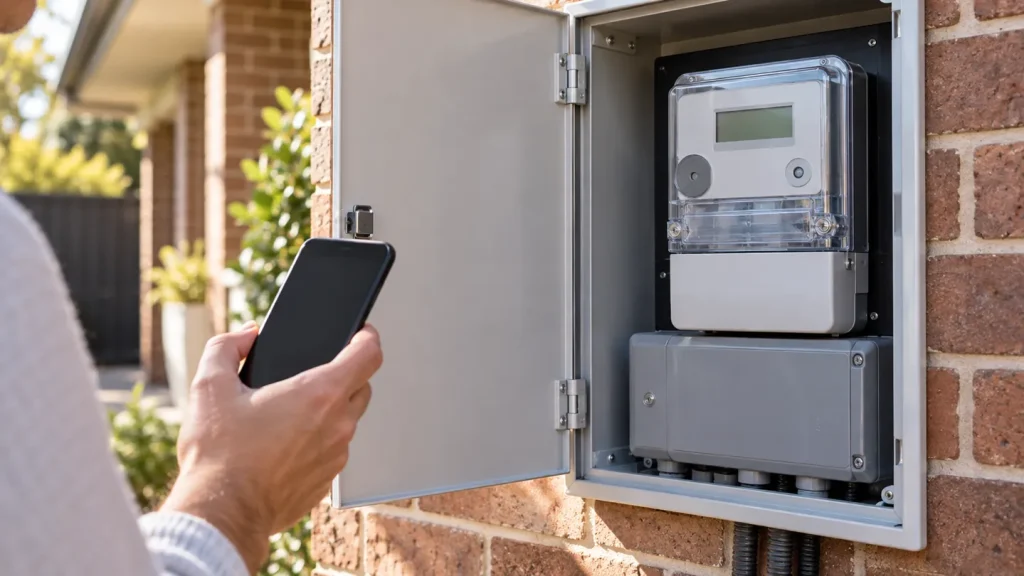
If you’ve had a smart meter installed in the last few years, there’s a good chance you’re on a time-of-use tariff, even if you never chose one. With time of use electricity NSW households pay different prices depending on when they use power, not just how much.
That can work for you or against you. Do you know which hours you’re paying the most for? Most people don’t, and that’s exactly where money leaks out of a household budget. This guide explains how time-of-use pricing works in Sydney, what the peak windows are, and how to make the timing work in your favour.
What Is a Time-of-Use Tariff?
A time-of-use (TOU) tariff charges different rates at different times of day. Instead of one flat price per kWh, you’ll usually see:
- Peak: the most expensive rate, when demand on the grid is highest
- Shoulder: a middle rate on some plans
- Off-peak: the cheapest rate, when demand is low
TOU pricing needs a smart meter, because your retailer has to measure your usage in half-hour intervals. The logic is that power costs more to supply when everyone wants it at once.
When Is Peak Time in Sydney?
This is where it gets confusing, because two different sets of times exist.
Network times. Your electricity network sets the times its charges change. On the Ausgrid network, which covers much of Sydney’s east, inner city and north, the residential peak runs from 3pm to 9pm every day during summer (November to March) and winter (June to August). In April, May, September and October there’s no network peak period at all. Ausgrid has also combined its old shoulder and off-peak windows to simplify its tariffs.
Retail times. Your retailer turns those network charges into the plan you actually pay. Retailers can choose different prices, and sometimes different time windows, from the network’s. Endeavour Energy and Essential Energy also have their own schedules.
The only way to know your exact peak hours is to check your plan’s Basic Plan Information Document or your bill.
Who Wins and Who Loses on Time of Use?
Picture two households in the same Hornsby street. The first is a retired couple who do their washing mid-morning, cook lunch as their main meal and are in bed by nine. Most of their usage lands outside peak, and TOU suits them well.
The second is a family with two working parents and three kids. Everything happens between 4pm and 9pm: cooking, homework, showers, air conditioning, the TV. Almost all of their usage lands in the peak window, where grid rates can reach up to 56¢ per kWh. For them, time-of-use pricing can make bills noticeably higher.
Which household sounds more like yours?
How to Make Time of Use Work for You
Shift what you can to the middle of the day. Washing machines, dryers, dishwashers and pool pumps can all run on timers. Midday is when the grid is flooded with rooftop solar and energy is cheapest.
Look at the Solar Sharer Offer. Since 1 July 2026, NSW retailers must offer at least one plan with free power from 11am to 2pm, up to 24 kWh a day, according to SolarQuotes’ summary of the rules. It suits homes that can move usage into that window.
Pre-cool or pre-heat. Running the air conditioner at 2pm instead of 6pm can take a big chunk out of your peak usage on hot days.
Deal with the evening peak directly. Some usage just can’t move. Dinner still happens at dinner time. The only way to avoid buying that energy at peak prices is to have energy stored from earlier in the day. Our guide to a solar battery vs no battery covers how storage changes the maths.
How Is Tesseract ZERO Different?
Time-of-use pricing puts the expensive hours right when families need power most. Tesseract ZERO is a third way to energy that tackles that head on. We install solar and battery technology at your home, own it and manage it. Your home generates clean energy during the day and stores it for later, so you draw less from the grid when peak prices apply.
You pay a fixed 28¢ per kWh for the clean energy your home uses, fixed for the 10-year agreement term, with $0 upfront. Solar generated at home can cover up to 70% of a household’s daily energy, and you stay connected to the grid for the rest. See how it works on the Tesseract ZERO page, or compare it with grid-only living in our solar vs grid electricity guide.
FAQ
What are the peak electricity times in NSW?
On the Ausgrid network, residential peak runs from 3pm to 9pm every day from November to March and June to August, with no peak in April, May, September and October. Your retailer’s plan may use different times, so check your plan details.
Am I on a time-of-use tariff?
If you have a smart meter, you may well be. Your bill will show separate peak, off-peak and possibly shoulder rates if you are on a TOU plan.
Is time of use cheaper than a flat rate?
It depends on when you use power. Households that use most of their electricity outside peak hours often save, while households with heavy evening usage can pay more.
Conclusion
Time of use electricity NSW pricing rewards households that use power in the middle of the day and penalises those who can’t avoid the evening rush. Find out your exact peak hours, shift what you can, and think seriously about how your home covers the hours it can’t shift.
Want to see how your usage lines up? Send us one power bill. No cost, no obligation — and if it isn’t a good fit, we’ll tell you. Get in touch.
How is Tesseract ZERO different?
Clean energy made at your home, without buying the system.
Tesseract installs, owns and maintains solar and a battery at your home. You pay only for the clean energy you use, at one fixed rate for 10 years.