
📋 In this guide:
- Solar battery plan Australia: pay for power, not hardware
- $0 upfront plans remove the biggest barrier to storage
- Monthly cost replaces a large one-off purchase
- Maintenance and inverter risk sit with the provider
- Tesseract ZERO runs on this model at a fixed rate
The battery is usually the part of a solar setup that stops people in their tracks. Panels are affordable enough, but a good-sized battery can more than double the upfront price, and that's a hard cheque to write for something that pays back slowly. So a fair question is whether you can get the battery without the lump sum, and that's exactly what a solar battery plan in Australia offers.
The idea is simple. Instead of buying the battery outright, you pay for the power it delivers, usually a fixed rate per kWh or a set monthly amount, with little or nothing upfront. The provider owns and maintains the hardware. You get storage in your home without the capital cost, and without the risk of an expensive part failing on your watch.
This guide covers what a battery plan actually means, how $0 upfront compares to buying outright, how the monthly cost works, and who these plans suit.
What a Solar Battery Plan Actually Means
A solar battery plan is a way of accessing home storage as a service rather than a purchase. The provider installs the battery, owns it, and keeps it running. You pay for the energy it provides, not for the box itself.
It's the same shift you've seen elsewhere: you don't buy a mobile tower to get phone reception, you pay for the service. Here, you don't buy a battery to get stored solar in the evening, you pay for the power on a plan. The hardware, and the risk that comes with it, stays with the company that installed it.
That framing matters because a battery isn't a set-and-forget object. It has a working life, it can fail, and the inverter alongside it can fail too. On a plan, those are someone else's problem to fix.
$0 Upfront vs Buying a Battery Outright
Buying outright means you own the battery from day one and capture all the savings it generates, but you also carry the full upfront cost and every risk that follows. If the battery underperforms, or the inverter dies in year four, that's your bill. The payback stretches over many years, and you're betting the hardware lasts long enough to get there.
A $0 upfront plan flips that. There's little or no capital cost, so you start saving on your evening power from the first bill without a big outlay. In exchange, you don't own the asset, and over the very long run the total you pay may be more than buying would have cost, the same trade you make renting versus buying anything.
Which is better? It depends on whether you have the capital spare and want to own the asset, or whether you'd rather keep your cash, skip the risk, and pay as you go. Neither is automatically right. Be honest about which matters more to you.
How the Monthly Cost Works
On most plans, your cost is tied to the power you actually use rather than a flat rental. A common structure is a fixed rate per kWh for the electricity the system delivers, which means your bill scales with your usage and you're not paying a big fixed sum whether you use the battery or not.
The appeal of a fixed rate is predictability. Grid electricity prices move around, sometimes sharply, and a fixed per-kWh plan locks in what you pay for the power your system provides, insulating you from those swings. When you're comparing plans, look at the rate, the contract length, and what happens at the end of the term, not just the "$0 upfront" headline.
Picture opening your energy app and seeing the same per-kWh rate this month as last month, and the month before, while the news is full of retail price rises. That stability is a big part of why fixed-rate plans appeal.
What to Check Before You Sign
A battery plan is a longer commitment than a normal energy contract, so a few things are worth confirming before you commit. What's the rate, and is it genuinely fixed or does it escalate? How long is the term, and what are your options if you move house or want out early? Who's responsible when something breaks, and does that genuinely include the inverter, not just the battery cells?
Also check what happens at the end of the term. Do you have the option to buy the system, extend, transfer it, or have it removed? Good plans give you choices there rather than locking you into one exit.
Would the plan still make sense if you moved in five years? Asking that upfront saves surprises later. The details around exit, transfer and maintenance are where plans differ most, so that's where to focus your reading.
A Real-Life Scenario: The Battery They Kept Putting Off
Picture a couple in regional Victoria who'd wanted a battery for two years but kept stalling at the price. Every quote landed at a number that meant dipping into savings for something that paid back slowly, and it never quite made it to the top of the list.
On a $0 upfront battery plan, the decision changed shape entirely. There was no lump sum to find, so it stopped being a big capital call and became a line on the monthly bill, one that was covered largely by the evening grid power they no longer had to buy. The inverter and battery maintenance weren't theirs to worry about either. Would they have eventually bought one outright? Maybe, in a few more years. The plan just let them stop waiting.
Where Tesseract ZERO Fits In
Tesseract ZERO runs on exactly this model. The 6.6kWp solar and 20kWh battery system is installed with $0 upfront and $0 maintenance, and you pay a fixed $0.28/kWh for the power through the Tesseract retail partner rather than buying the hardware. Because Tesseract owns the system, the inverter and battery risk sits with us, not you, and the 20kWh capacity is sized to carry a full household evening rather than running dry overnight. The 10-year fixed rate is the point most worth underlining: while grid prices move, the rate for your stored solar stays put, which is the whole appeal of a plan over a purchase.
The Bottom Line
A solar battery plan in Australia lets you get home storage without the big upfront cost, paying for the power the system delivers instead of buying the hardware. It suits you if you'd rather keep your capital, avoid the risk of an expensive part failing, and lock in a predictable rate against moving grid prices. Buying outright suits you if you have the cash spare and want to own the asset and all its savings. Before signing any plan, check the rate, the term, who covers maintenance including the inverter, and your options at the end.
Want to see what a $0 upfront battery would cost you each month? Book a free assessment and we'll map it to your actual usage.
For the background on $0 upfront models, read what a $0 upfront solar energy plan is, and see what a full solar system with a battery includes. Next in this series, we compare a solar PPA versus owning your system outright.
Frequently Asked Questions
What is a solar battery plan?
It's a way to get a home battery as a service instead of buying it. The provider installs, owns and maintains the battery, and you pay for the power it delivers, usually a fixed rate per kWh with little or no upfront cost. The hardware risk stays with the provider.
Is a $0 upfront battery plan cheaper than buying outright?
It's cheaper to start, because there's no large capital cost, and you avoid the risk of paying for repairs. Over the very long run, buying may cost less in total, the same as buying versus renting anything. Which is better depends on whether you value keeping your capital and avoiding risk, or owning the asset.
What happens at the end of a battery plan?
It depends on the provider. Good plans give you options: buy the system, extend, transfer it to a new owner if you move, or have it removed. Always check the end-of-term terms, along with the rate, contract length and who covers maintenance, before you sign.
—
Önerilen Görseller ve Alt Text:
- Hero: Ev duvarında battery, önünde $0 upfront rozeti — alt: "Home battery installed on a $0 upfront solar battery plan in Australia"
- Karşılaştırma: Peşin satın alma vs aylık plan maliyet çizgisi — alt: "Buying a battery outright versus a $0 upfront monthly plan comparison Australia"
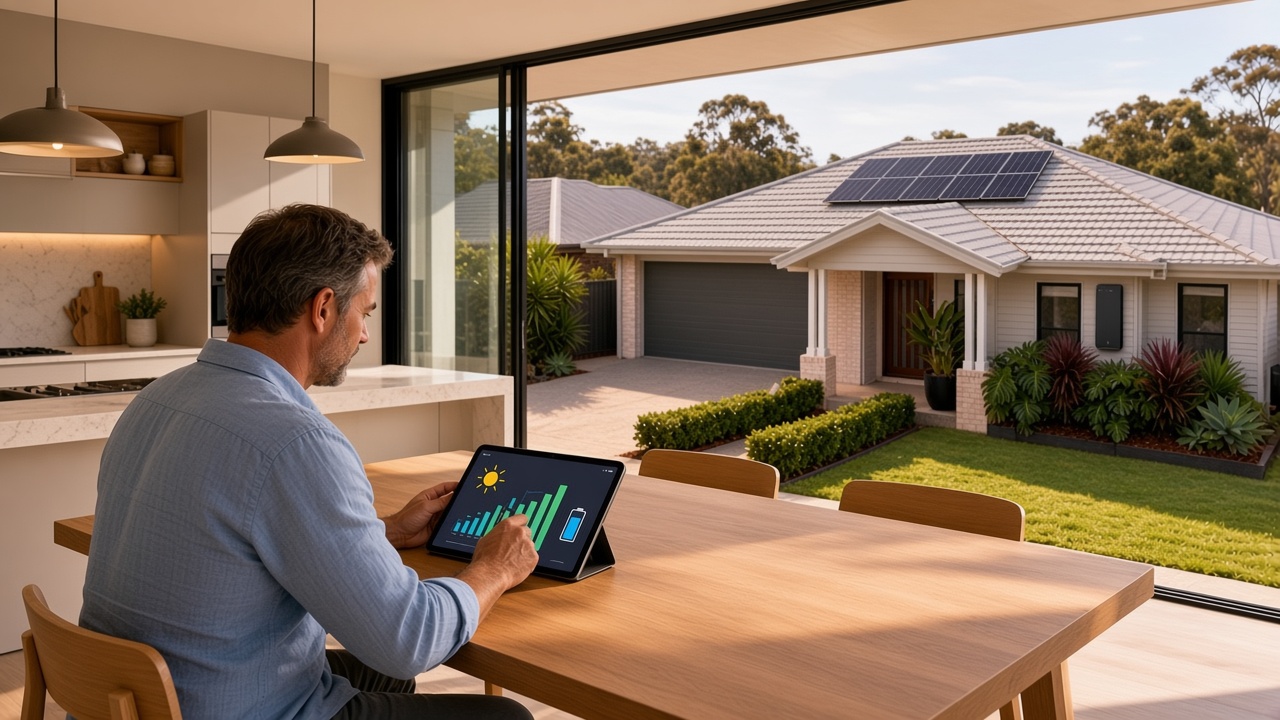
- Ekran: Sabit per-kWh oranını gösteren enerji uygulaması — alt: "Fixed per-kWh rate on a solar battery plan shown in an energy app Australia"
How is Tesseract ZERO different?
Clean energy made at your home, without buying the system.
Tesseract installs, owns and maintains solar and a battery at your home. You pay only for the clean energy you use, at one fixed rate for 10 years.