
📋 In this guide:
- Home battery cost 2026: about $550–$1,000 per usable kWh
- Federal rebate lowers prices, but tapers above 14 kWh
- A 10 kWh battery runs about $8,450 installed
- Inverter, brand and installation all move the price
- Tesseract ZERO means no battery purchase at all
Home batteries have gone from niche to mainstream in a couple of years, helped along by a generous federal rebate. But when you start asking for quotes, the prices can be all over the place. One installer quotes $7,000, another $15,000, and both say it’s a great deal.
So what’s a fair home battery cost 2026? This guide pulls together current market figures, explains what drives the price up or down, and shows how to size a battery for the way a Sydney or Adelaide household actually uses power.
Typical Battery Prices in 2026
According to Solar Choice’s September 2026 figures, residential batteries usually cost between $550 and $1,000 per usable kWh installed, including the federal Cheaper Home Batteries rebate but before any state incentives.
Solar Choice’s typical fully installed prices, including the federal rebate, look like this:
| Usable capacity | Battery only | With inverter/charger |
|---|---|---|
| 5 kWh | about $5,325 | about $7,425 |
| 10 kWh | about $8,450 | about $10,150 |
| 15 kWh | about $11,325 | about $13,125 |
Source: Solar Choice, September 2026. Prices vary by brand, installer and location.
If you don’t already have solar, you’ll need panels too. A typical solar and battery system can cost $14,000 to $28,000, even after rebates.
How the Rebate Affects Bigger Batteries
Since 1 May 2026, the federal rebate tapers by size. The first 14 kWh of usable capacity gets full support, capacity between 14 and 28 kWh gets 60%, and anything from 28 to 50 kWh gets just 15%. The rebate also steps down every January and July. Our guide to the 2026 home battery rebate explains the changes in detail.
In practice, that means each extra kWh above 14 costs you noticeably more than the ones below it.
What Drives the Price Up or Down
- Capacity. More kWh means a higher price, though the cost per kWh usually falls as size grows.
- Brand and chemistry. Premium brands can cost far more per kWh than budget options with similar capacity.
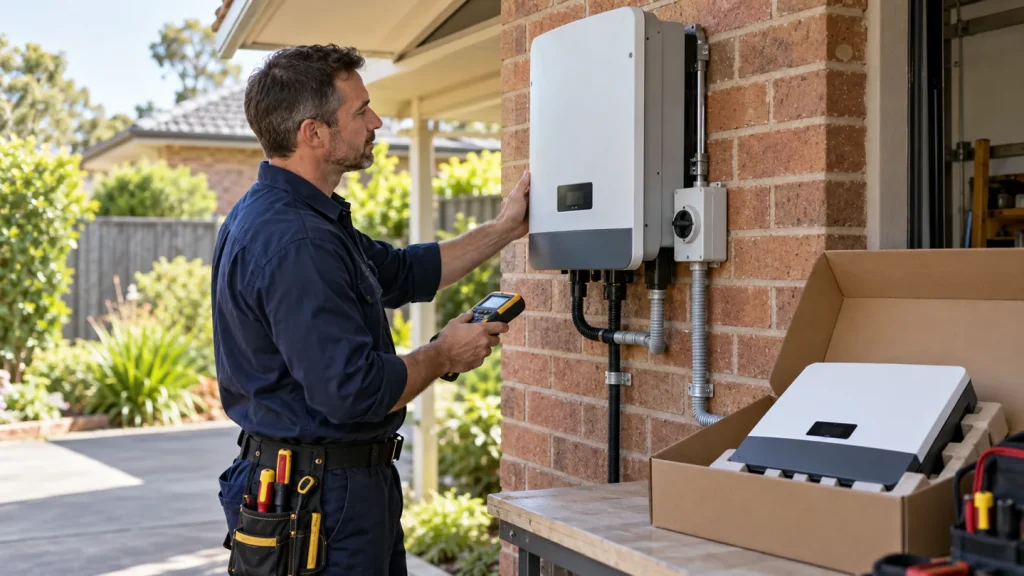
- Inverter setup. If your existing solar inverter can’t manage a battery, you’ll need a hybrid inverter or a separate battery inverter, which adds cost.
- Backup capability. Systems that keep circuits running during a blackout need extra hardware and wiring.
- Installation complexity. Older switchboards, long cable runs or awkward mounting locations add labour.
- State incentives. NSW has offered extra support for batteries connected to a virtual power plant. Check current terms before relying on it.
How to Size a Battery for Your Home
Here’s the mistake many people make: sizing a battery to their total daily usage. A battery’s job is to cover the hours your solar can’t, mostly the evening and overnight.
Picture a family of four in Rostrevor, Adelaide. They use about 21 kWh a day, but only around 9 kWh of that happens after the sun goes down. A battery sized to their full daily usage would sit half-empty most nights. Why pay for capacity you’ll rarely use?
To size sensibly:
- Look at your usage between about 4pm and 7am in your retailer’s app.
- Check how much solar you export in the middle of the day, since that’s what a battery would store.
- Plan for winter, when solar output drops and evening demand rises.
In Sydney, where peak time-of-use periods can run from 3pm to 9pm, and in Adelaide, where the evening peak does most of the damage, the goal is the same: store cheap daytime energy and avoid buying expensive power at night. Peak grid rates can reach up to 56¢ per kWh.
Is a Battery Worth It?
It can be, if the evening savings add up to more than the cost over the battery’s life. Batteries age, though, and components eventually need servicing or replacement. When you own one, that risk is yours. Our comparison of a solar battery vs no battery runs through the trade-offs.
How Is Tesseract ZERO Different?
Tesseract ZERO is a third way to energy: you get the benefit of solar and storage without buying the battery. We install the technology at your home, own it, operate it and manage it. There’s $0 upfront, no system purchase, no financing and no maintenance responsibility on your side.
You pay a fixed 28¢ per kWh for the clean energy your home uses, fixed for the 10-year agreement term. Solar generated and stored at home can cover up to 70% of a household’s daily energy. See how it works on the Tesseract ZERO page.
FAQ
How much does a home battery cost in 2026?
According to Solar Choice, batteries usually cost $550 to $1,000 per usable kWh installed, after the federal rebate and before state incentives. A 10 kWh battery typically costs around $8,450 installed, or about $10,150 with an inverter.
Is the battery rebate still available in 2026?
Yes. The federal Cheaper Home Batteries Program continues, but support tapers for capacity above 14 kWh and steps down every January and July.
What size battery do I need?
Size a battery to your evening and overnight usage, not your total daily usage. Check your usage between about 4pm and 7am to get a realistic figure.
Conclusion
The home battery cost 2026 buyers face depends on size, brand, inverter setup and installation, with the federal rebate helping most on the first 14 kWh. Size your battery to your evenings, get quotes on a like-for-like basis, and factor in who handles the equipment as it ages.
Curious whether owning a battery or using one makes more sense for you? Send us one power bill. No cost, no obligation — and if it isn’t a good fit, we’ll tell you. Get in touch.
How is Tesseract ZERO different?
Clean energy made at your home, without buying the system.
Tesseract installs, owns and maintains solar and a battery at your home. You pay only for the clean energy you use, at one fixed rate for 10 years.