📋 In this guide:
- Solar system with battery Australia: panels, battery and inverter combined
- Full setups cost more upfront but capture evening use
- Battery payback depends on your evening electricity use
- A 20kWh battery covers most household evenings
- Tesseract ZERO bundles solar and 20kWh storage at $0 upfront
You've probably got the solar part clear in your head: panels on the roof, cheaper daytime power, a smaller bill. The battery is where it gets murky. Is it worth the extra cost, or is it a nice-to-have you can skip? That's the real question behind most searches for a solar system with battery in Australia, and it deserves a straight answer rather than a sales pitch.
Here's the short version. Solar alone saves you money during the day. A battery lets you use that solar at night, which is when most households actually burn the most power. Whether the battery pays for itself comes down to how much electricity you use after the sun goes down, and what you'd otherwise pay the grid for it.
This guide covers what a full solar-and-battery setup includes, what it costs in 2026, whether the battery earns its keep, and how big a battery you actually need.
What a Solar System With a Battery Includes
A complete setup is more than panels and a box on the wall. You're looking at four main parts working together.
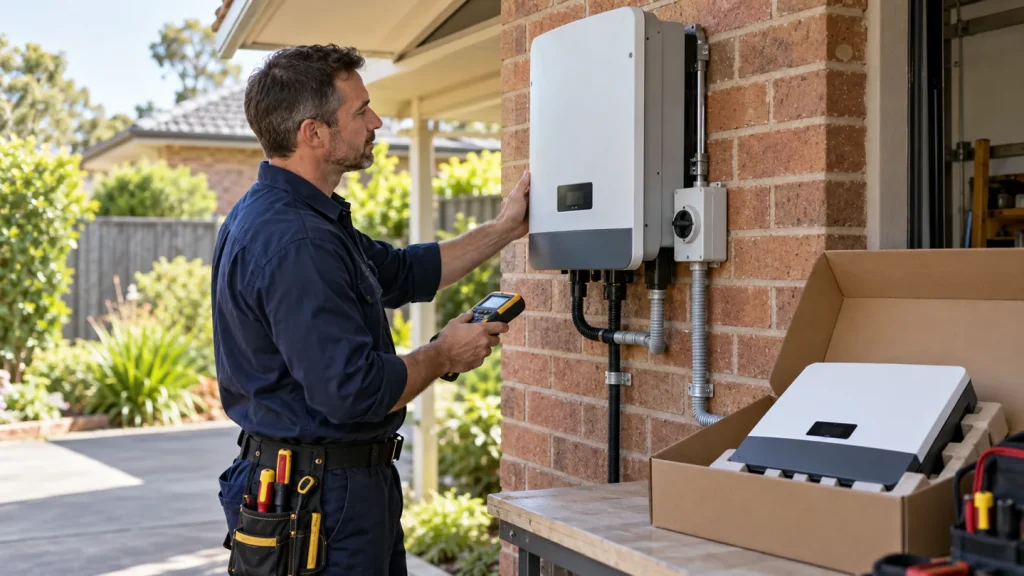
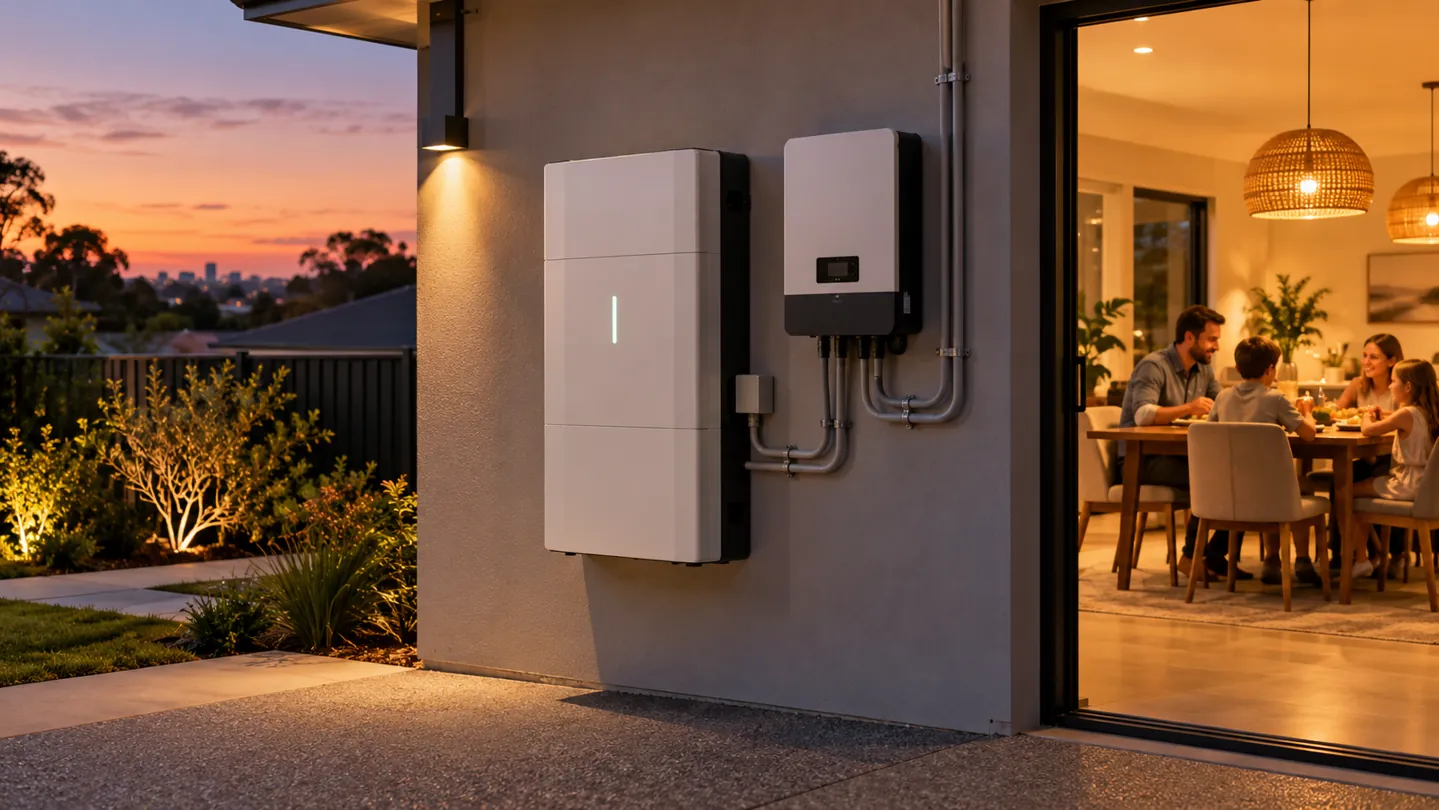
The solar panels generate power during daylight. A common residential size sits around 6.6kWp, enough to cover a typical home's daytime use with a surplus to store. The battery stores that surplus so you can use it in the evening instead of exporting it for a small feed-in tariff and buying it back later at full price. The inverter converts between the DC power the panels and battery use and the AC power your home runs on. A hybrid inverter handles both solar and battery in one unit, which keeps the system tidier.
Some setups add blackout protection, which lets the battery keep essential circuits running when the grid goes down. Not every battery does this by default, so it's worth checking if outages are a concern where you live.
What It Costs in Australia (2026 Ranges)
Prices move, and they vary by system size, brand and install complexity, so treat any figure as a ballpark and get a quote for your own roof. As a rough guide in 2026, a quality solar-only system runs into the several-thousand-dollar range after rebates, and adding a decent-sized battery can more than double the upfront cost.
That's the sticker-shock number, and it's why a lot of people hesitate. But the upfront price isn't the whole story. The rebate on the solar portion, plus any battery incentives available in your state, brings it down. And the way you pay matters as much as the price itself, which we'll come back to.
The key thing to hold onto: a battery is a bigger upfront commitment than panels alone, so whether it's worth it depends entirely on what it saves you over time.
Does the Battery Actually Pay for Itself?
Here's the honest maths. Without a battery, your surplus daytime solar gets exported for a feed-in tariff, which in 2026 is small, often just a few cents per kWh. Then in the evening you buy power back from the grid at full retail rate, which might be four or five times that. A battery closes that gap: it stores your cheap daytime solar and hands it back at night, so you avoid buying expensive grid power after dark.
The size of that saving depends on your evening use. A household that's out all day and home all evening, running aircon, cooking, washing, and charging devices after 6pm, gets a lot from a battery, because that's exactly when it's discharging. A household that uses most of its power during the day gets less, because solar was already covering it.
So does it pay for itself? For homes with meaningful evening load, generally yes, over the life of the battery. For low-evening-use homes, the case is weaker. Look at your own bill and ask: how much am I spending on power after sunset? That number is your answer.
How Big a Battery Do You Actually Need?
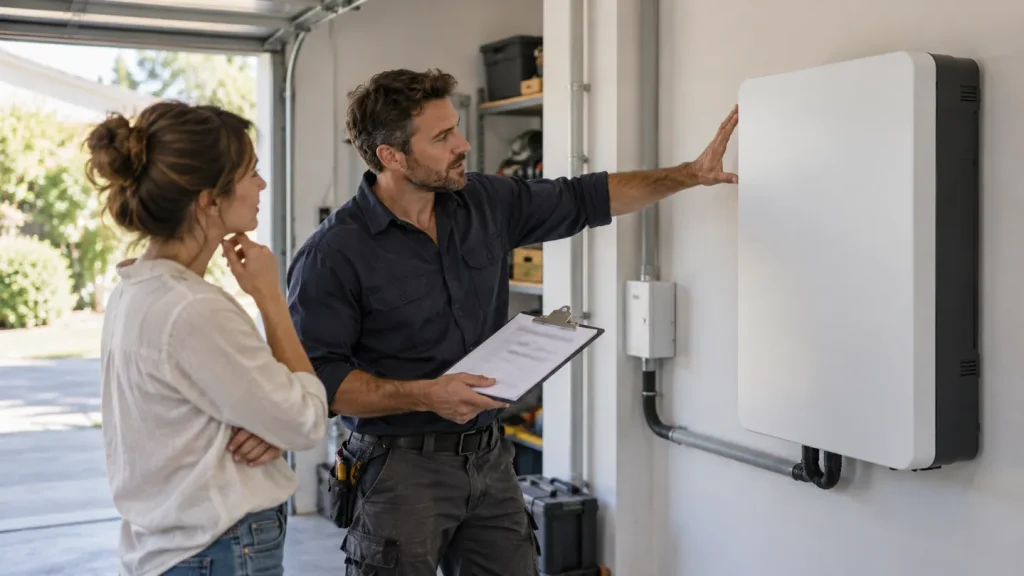
Battery size is measured in kilowatt-hours (kWh), and it's easy to under-size. A typical Australian home uses a good chunk of its daily power in the evening and overnight. Many battery packages land around 10 to 13kWh, which covers part of an evening but can run dry before morning, sending you back to the grid at the worst-priced time of day.
A larger battery, in the 20kWh range, gives you room to run a full evening and into the night on stored solar, and to keep more essentials going through a blackout. The trade-off is upfront cost, which is exactly where the payment model starts to matter.
Picture a Tuesday night: it's 10pm, the dishwasher's running, the aircon's still on in the bedrooms, and the question is simply whether that power is coming from your battery or from the grid at peak rates. A battery sized to your real evening use is the difference.
A Real-Life Scenario: The 7pm Problem
Picture a family in western Sydney, both parents working, kids home after school. Their solar was doing its job at noon, when nobody was home to use it, and exporting the surplus for a few cents. Then everyone arrived home at once: dinner on, aircon on, laundry going, screens everywhere. Every watt of that 7pm surge came from the grid at full peak price.
Adding a battery flipped it. The solar that used to be exported for pennies now charged the battery, and that stored power ran the evening rush instead of the grid. Their biggest daily spend, the after-work peak, shifted from grid power to their own sun. Would panels alone have fixed that? Not the evening part, which was most of their bill.
Where Tesseract ZERO Fits In
The upfront cost is the main thing standing between most people and a properly sized battery, and that's the part Tesseract ZERO is built around. The standard package pairs 6.6kWp of solar with a 20kWh battery and a hybrid inverter, with $0 upfront and $0 maintenance. Where many battery packages stop at 10 to 13kWh, the larger 20kWh capacity is sized to carry a real household evening, and the Power Backup Gateway keeps essentials running through an outage. You pay a fixed $0.28/kWh for the power through the Tesseract retail partner rather than a large upfront lump sum, so the battery question stops being "can I afford it now" and becomes "does this cover my evenings," which for most homes it does.
The Bottom Line
A solar system with battery in Australia makes the most sense for homes that use a lot of power in the evening, because that's when a battery earns its keep, handing back cheap daytime solar instead of buying peak grid power. A full setup means panels, a battery, a hybrid inverter and ideally blackout protection, and the upfront cost is real, so the payment model matters as much as the price. Size the battery to your actual evening use, not the smallest option, or you'll be back on the grid before morning.
Want to know what size battery suits your home? Book a free assessment and we'll look at your evening use and map it to the right storage.
For the case for storage in the first place, read solar battery vs no battery, and for the full cost picture see solar energy cost in Australia 2026. Next in this series, we explain how a virtual power plant works for Australian homeowners.
Frequently Asked Questions
Is it worth adding a battery to a solar system in 2026?
For homes with meaningful evening electricity use, usually yes, because a battery stores cheap daytime solar and runs your evening load instead of buying peak grid power. For homes that use most of their power during the day, solar alone may already cover it, so the battery case is weaker. Check how much you spend after sunset.
How much does a solar and battery system cost in Australia?
It varies by size, brand and install, but in 2026 a quality solar-only system runs into the several-thousand-dollar range after rebates, and adding a battery can more than double the upfront cost. State battery incentives and the way you pay both change the real number, so get a quote for your own home.
What size battery do I need for a house?
Many packages sit around 10 to 13kWh, which covers part of an evening but can run out overnight. A larger battery in the 20kWh range is sized to run a full evening and keep essentials going through a blackout. The right size depends on how much power you use after dark.
—
Önerilen Görseller ve Alt Text:
- Hero: Ev duvarında battery + hybrid inverter, çatıda panel — alt: "Home solar system with battery and hybrid inverter installed in Australia"
- Grafik: Gündüz solar vs akşam battery kullanım eğrisi — alt: "Daytime solar charging and evening battery discharge for an Australian home"
- Karşılaştırma: 10-13kWh vs 20kWh battery kapasite kutusu — alt: "Comparison of 10-13kWh versus 20kWh home battery capacity Australia"
How is Tesseract ZERO different?
Clean energy made at your home, without buying the system.
Tesseract installs, owns and maintains solar and a battery at your home. You pay only for the clean energy you use, at one fixed rate for 10 years.