📋 In this guide:
- Virtual power plant Australia residential setup: many batteries as one
- Your battery exports to the grid at peak demand
- VPPs can earn credits but reduce your control
- Payments vary widely by provider and state
- Tesseract ZERO owns the hardware, so the risk isn't yours
If you've got a home battery, or you're about to, you've probably run into the term "virtual power plant" and wondered whether a residential setup is a clever way to earn from your storage or just a way for someone else to use your battery. Both readings have some truth in them, which is exactly why it's worth understanding before you sign up.
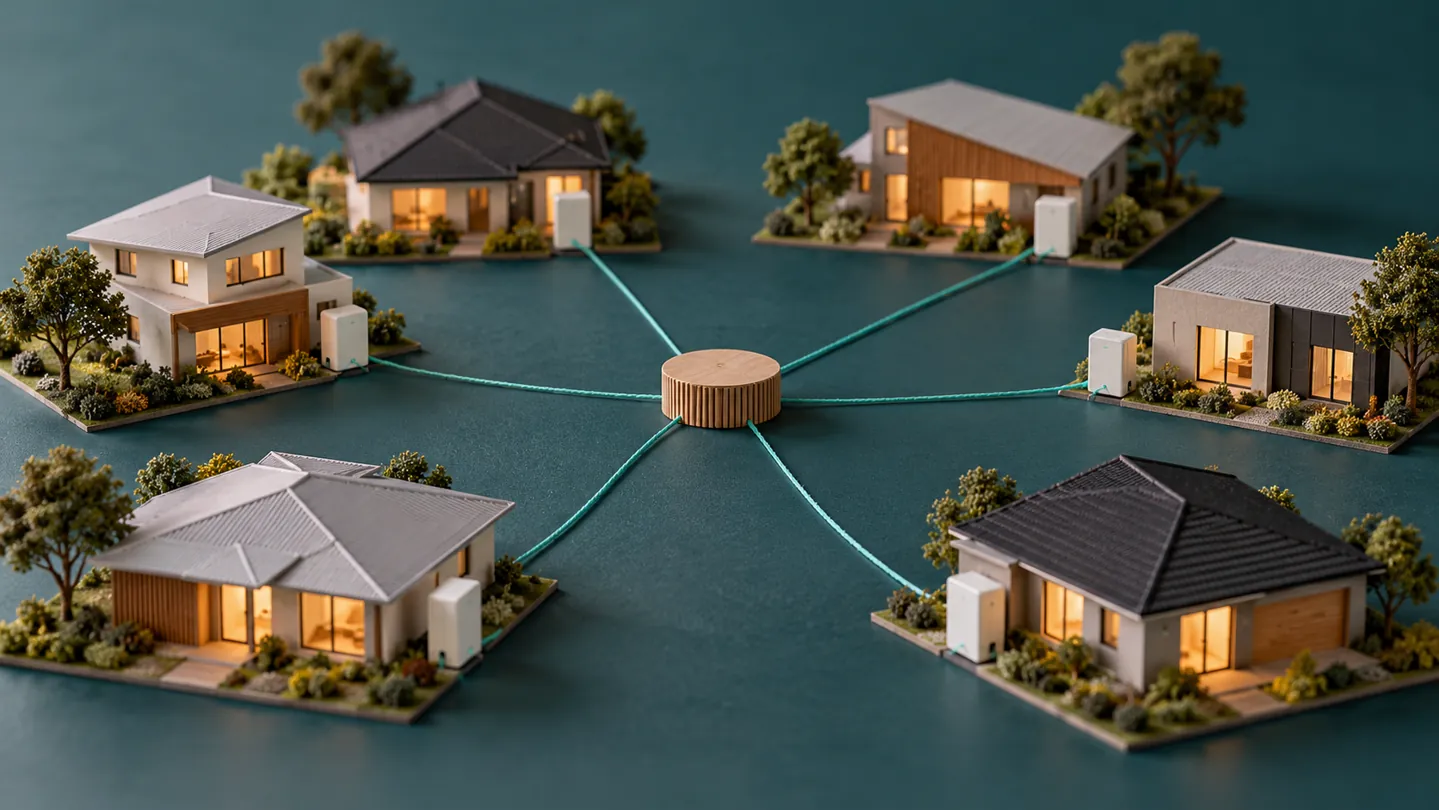
A virtual power plant in Australia is, at its simplest, a network of residential home batteries linked by software so they can act together like one big power station. When the grid is short on power, the operator draws a little from thousands of batteries at once, and you're paid or credited for what yours contributes. The idea is genuinely useful for the grid. Whether it's useful for you depends on the details.
This guide covers what a VPP actually is, how it works with your battery, what you can realistically earn, and whether joining one suits your home.
What Is a Virtual Power Plant? (Plain English)
Think of it like this. One home battery is a bucket of stored electricity. On its own, it powers your evening and that's it. A virtual power plant pools thousands of those buckets together, and software decides when to tip a small amount from each into the grid, all at the same moment, so the combined effect matches what a small power station would deliver.
The grid needs this because demand spikes, on a hot evening when everyone's aircon is running at once, are expensive and hard to meet with traditional generators. A VPP lets the grid lean on distributed home batteries instead of firing up a costly peaking plant. In return, the operator shares some of that value with the households whose batteries chipped in.
So you keep your battery for your own use most of the time, and occasionally it's called on to help the grid, for a payment.
How a VPP Works With Your Home Battery
In practice, you connect a compatible battery to a VPP program run by an energy retailer or aggregator. From then on, the operator can remotely discharge a portion of your battery to the grid during high-demand events, and sometimes charge it at optimal times too.
You usually set limits. Most programs let you reserve a minimum charge so the operator can't drain your battery flat and leave you buying grid power at 9pm. Events are typically short and occasional, concentrated in the peak periods where the grid value is highest, often summer evenings.
The catch is control. During an event, the software is deciding what your battery does, not you. For most people that's a fair trade for the credits, but it's the thing to be clear-eyed about: you're lending capacity, on terms set by the program.
What You Can Actually Earn (and the Trade-offs)
This is where honesty matters, because the numbers vary enormously and change often. VPP payments in Australia come in a few forms: upfront sign-up credits, higher feed-in rates for power exported during events, or annual reward payments. What you actually earn depends on the provider, your state, your battery size and how often events are called.
I won't quote a specific dollar figure here, because any number would be out of date quickly and would depend on a program you haven't chosen yet. What I can say is to read the terms closely and compare like with like: total expected annual value, not just the headline sign-up bonus.
The trade-offs are real too. Cycling your battery more often for grid events can contribute to wear over time, so check how the program treats battery warranty and whether there's any compensation for extra cycling. Weigh the credits against giving up some control and some battery life. Is the payment worth it for you? For many it is, but only you can run that comparison against your own priorities.
Is a VPP Right for Your Home?
A VPP tends to suit you if you already have, or are getting, a battery big enough that lending a slice to the grid won't leave you short in the evening. It suits you if you're comfortable with the operator occasionally controlling the battery, and if the program's total annual value stacks up against the wear and the loss of control.
It suits you less if your battery is on the smaller side and you rely on every kWh for your own evening use, or if you want full manual control of your storage at all times.
Picture a hot Thursday in January: it's 6pm, demand across the state is peaking, prices are spiking, and your battery quietly exports a few kWh into that spike for a credit while still keeping enough back to run your own evening. That's the VPP case at its best. The question is whether the terms on offer actually deliver that balance.
A Real-Life Scenario: The Summer Evening Event
Picture a household in South Australia with a decent-sized battery, signed up to a VPP. On a mild day they'd never notice it, the battery charges on solar and runs their evening as normal. But on a scorching late-January evening, when the whole state's aircon kicks in and wholesale prices go through the roof, their battery gets called.
For an hour or two, it feeds a small, capped amount into the grid, they keep a reserve for themselves, and they earn a credit for helping at the exact moment the grid needed it most. Over a summer of a handful of these events, the credits add up. Did they give up a little control? Yes. Did it cost them their own evening power? No, because they'd set a reserve. That balance is the whole game.
Where Tesseract ZERO Fits In
With most VPPs, you've bought the battery, so the wear from extra grid cycling and the warranty questions land on you. Tesseract ZERO changes who carries that. Because Tesseract owns the 20kWh battery, the inverter and the maintenance, the hardware risk sits with us, not you, and the system is built around covering your home's real evening load first. If you're weighing whether extra grid cycling is worth it against battery life, that calculation looks very different when you don't own the battery and aren't carrying its wear. You get a system sized for your evenings, at a fixed $0.28/kWh through the Tesseract retail partner, without taking on the equipment risk that VPP participation can add for owners.
The Bottom Line
A virtual power plant in Australia links home batteries so they can support the grid at peak demand, and in return households earn credits or payments. It can be worthwhile if you have a battery large enough to spare some capacity and you're comfortable with the operator occasionally controlling it. The earnings vary widely by provider and state, so compare total annual value rather than headline bonuses, and check how the program treats battery wear and warranty. The core trade is simple: some control and some cycling, for some credits.
Want a system sized for your evenings without carrying the hardware risk yourself? Book a free assessment and we'll walk you through it.
For the storage basics, read solar battery vs no battery, and see what a full solar system with a battery in Australia includes. Next in this series, we break down how a solar battery plan with $0 upfront works.
Frequently Asked Questions
Is joining a virtual power plant worth it in Australia?
It can be, if you have a battery large enough to lend some capacity without leaving yourself short in the evening, and if the program's total annual value outweighs the extra battery cycling and the loss of control. Earnings vary a lot by provider and state, so compare the full terms, not just the sign-up bonus.
Will a VPP drain my home battery?
Most programs let you set a minimum reserve so the operator can't discharge your battery below a level you choose. Events are usually short and concentrated in peak-demand periods. Still, read the terms to confirm how much can be exported and how often, before you join.
Does being in a VPP wear out my battery faster?
Cycling a battery more often for grid events can contribute to wear over time. Check how the program treats your battery warranty and whether it compensates for extra cycling. If you don't own the battery, that wear isn't your financial risk to carry.
—
Önerilen Görseller ve Alt Text:
- Hero: Bir mahalledeki evlerin bataryalarının şebekeye bağlı görseli — alt: "Virtual power plant linking home batteries across an Australian neighbourhood"
- Diyagram: Peak demand anında bataryadan şebekeye akış — alt: "Home battery exporting to the grid during a peak demand VPP event Australia"
- Kontrol paneli: Rezerv şarj ayarı arayüzü — alt: "Setting a minimum battery reserve for a virtual power plant program Australia"
How is Tesseract ZERO different?
Clean energy made at your home, without buying the system.
Tesseract installs, owns and maintains solar and a battery at your home. You pay only for the clean energy you use, at one fixed rate for 10 years.